The following are proposed assessments -- both summative and formative -- I have planned for my standards-based unit related to the mastery of technology subjects in an English Language Arts classroom.
Performance-Based Summative Assessment
The big difference between the fifth grade ELA technology standard and the sixth grade one is independence. Students must be able to independently create and collaborate using technology, with no assistance from an adult.
Therefore, this proposed Summative Assessment must take place within one class period. If it were to be created outside of the classroom, or in the space of two class periods, the student may receive assistance from an adult without the teacher's knowledge.
To review, in order to meet all five objectives of this unit, students must be able to:
- Create a Google Document by collaborating with groups of four peers. They will be able to use separate devices in order to create a four page informational text on a topic of their choice.
- Write and publish their own one-page blog post about a topic they have researched by reading other blogs and taking the author's point of view into consideration. Students will do this without additional adult assistance.
- Identify five formatting options they may use as they prepare their writing for publication. Students will choose options such as subheadings and bullet points in order to polish their writing for publication, and edit peers' work to suggest better formatting options.
- Evaluate what type of information can be best described by using a table. Furthermore, students will be able to to identify and use a table-making application in order to create and include a table in their published work.
- Evaluate the strengths and weaknesses of social media applications including Facebook, Instagram, and Twitter, and the tools, such as hashtags, that are most effective when using these applications
In order to measure students' ability to use these tools independently, they will be given a performance-based summative assessment in which they will partner with three classmates they haven't worked with before.
These new groups of four will be asked to create a document together and share it with each other, but to demarcate their own work using their names, so that their work may be graded on each student's ability, although it is a group project.
Then, the students will create two tables in the document, and each student will choose one row to fill in for each table.
First Table
Each row must contain a formatting option, the purpose of that formatting option along with an example of when it would be used, along with the student's name. (I have created an example of a table that fulfills this requirement at this link.)
Second table
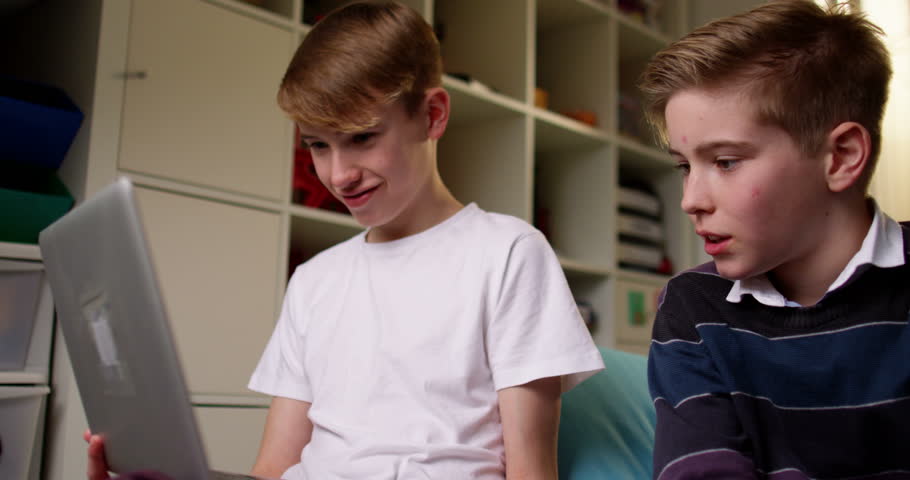 Students will complete a similar table, and each student will list a least two "pros" and two "cons" of using Facebook, Snapchat, Twitter, and Instagram.
Submission
Students will then read each other's entries for grammatical errors and accuracy in their descriptions, and finally, they will insert both tables as a blog entry on the class blog.
Next Day: Entrance Ticket
Although the teacher will be circulating during the assessment, it's possible that some students felt they contributed a disproportionate amount (either less or more) to the project, and that would be important to know. Therefore, in the next day's entrance ticket (or "bell work"), the teacher will ask the students to privately provide feedback about how well their group worked together. They will receive one sheet of paper with scores of 1 to 5, in terms of how well their group worked together, how much editing they provided to other students, and how they feel they contributed. Finally, they will be asked, on a scale of 1-5, how confident they feel about the conclusion of the unit: Specifically: "Do you feel you have mastered these topics?"
Why this Summative Assessment Works
While it is a challenge to pull all five of these SMART objectives under one umbrella, in one class period, working without adult assistance, and with classmates, and further more under pressure is an important skill. It is precisely the purpose of this unit: to be able to create these tables within shared documents and include them in a blog post.
This performance-based summative assessment is preferable to a multiple choice test, or other traditional methods of testing, because it measures the objectives of the unit -- the students' ability to understand the material and perform the task -- more precisely. The result of the assessment, like the objectives, is specific (two tables created, including all information), measurable (with both the result of the assessment and the next day's entrance ticket), attainable (the previous lessons should have prepared the students for this), relevant (this maps directly to the standard, as well as real-life challenges), and time-bound (60 minutes might prove to be very time-bound!).
These new groups of four will be asked to create a document together and share it with each other, but to demarcate their own work using their names, so that their work may be graded on each student's ability, although it is a group project.
Then, the students will create two tables in the document, and each student will choose one row to fill in for each table.
First Table
Each row must contain a formatting option, the purpose of that formatting option along with an example of when it would be used, along with the student's name. (I have created an example of a table that fulfills this requirement at this link.)
Second table
Students will complete a similar table, and each student will list a least two "pros" and two "cons" of using Facebook, Snapchat, Twitter, and Instagram.Submission
Students will then read each other's entries for grammatical errors and accuracy in their descriptions, and finally, they will insert both tables as a blog entry on the class blog.
Next Day: Entrance Ticket
Although the teacher will be circulating during the assessment, it's possible that some students felt they contributed a disproportionate amount (either less or more) to the project, and that would be important to know. Therefore, in the next day's entrance ticket (or "bell work"), the teacher will ask the students to privately provide feedback about how well their group worked together. They will receive one sheet of paper with scores of 1 to 5, in terms of how well their group worked together, how much editing they provided to other students, and how they feel they contributed. Finally, they will be asked, on a scale of 1-5, how confident they feel about the conclusion of the unit: Specifically: "Do you feel you have mastered these topics?"
Why this Summative Assessment Works
While it is a challenge to pull all five of these SMART objectives under one umbrella, in one class period, working without adult assistance, and with classmates, and further more under pressure is an important skill. It is precisely the purpose of this unit: to be able to create these tables within shared documents and include them in a blog post.
This performance-based summative assessment is preferable to a multiple choice test, or other traditional methods of testing, because it measures the objectives of the unit -- the students' ability to understand the material and perform the task -- more precisely. The result of the assessment, like the objectives, is specific (two tables created, including all information), measurable (with both the result of the assessment and the next day's entrance ticket), attainable (the previous lessons should have prepared the students for this), relevant (this maps directly to the standard, as well as real-life challenges), and time-bound (60 minutes might prove to be very time-bound!).
Formative Assessment: Document Collaboration
After receiving instruction about collaborative documents -- and more specifically, how to share them with others for authorship, editing, and for final submission to a teacher -- throughout one 60-minute class period, the students will do the following in the final 15 minutes of class:
Why this Formative Assessment Works
This assessment will be helpful in determining whether every member of the class is now able to articulate to a partner their understanding of document collaboration, and then to transmit their classmates' thinking in a shared document. This skill will be invaluable to the students as they prepare to collaborate and create the four page informational text with their classmates.
If the teacher receives a document with complete sentences and thoughts from every student, then it can be assumed that every student is capable of briefly collaborating and communicating via a shared document. Any students who haven't completed this without assistance may submit it as homework. If more than 20% of the class struggles to complete this assignment, the teacher will know that some aspects of collaborate document creation need more review, or a different approach, in order for students to meet the greater standard (That goal is to create a four page informational text with three classmates.)
In this way, the formative assessment maps to a SMART goal. It is specific (a document with complete sentences), measurable (has the student accurately answered the question and submitted it?), attainable (the teacher will have modeled this activity throughout the lesson), relevant (this activity maps directly to the standard), and time-bound (students have 15 minutes to complete the assessment).
After receiving instruction about collaborative documents -- and more specifically, how to share them with others for authorship, editing, and for final submission to a teacher -- throughout one 60-minute class period, the students will do the following in the final 15 minutes of class:
- First, turn and talk with their elbow partner about what they gleaned from the lesson
- Create and collaborate on a brief document with this same classmate.
- Each student should contribute what their classmate learned in the class. For example, "John learned that he needs to change the privacy settings in a document in order to share them with the teacher, and also that he has the ability to suggest edits rather than simply making them."
- Finally, the partners will both share the document with the teacher. The teacher should receive the same document twice, as every student needs to practice sharing the document with the teacher.
Why this Formative Assessment Works
This assessment will be helpful in determining whether every member of the class is now able to articulate to a partner their understanding of document collaboration, and then to transmit their classmates' thinking in a shared document. This skill will be invaluable to the students as they prepare to collaborate and create the four page informational text with their classmates.
If the teacher receives a document with complete sentences and thoughts from every student, then it can be assumed that every student is capable of briefly collaborating and communicating via a shared document. Any students who haven't completed this without assistance may submit it as homework. If more than 20% of the class struggles to complete this assignment, the teacher will know that some aspects of collaborate document creation need more review, or a different approach, in order for students to meet the greater standard (That goal is to create a four page informational text with three classmates.)
In this way, the formative assessment maps to a SMART goal. It is specific (a document with complete sentences), measurable (has the student accurately answered the question and submitted it?), attainable (the teacher will have modeled this activity throughout the lesson), relevant (this activity maps directly to the standard), and time-bound (students have 15 minutes to complete the assessment).
References
"Use Technology to Collaborate and Publish (W.6.6)" (2017) Retrieved from https://goalbookapp.com/pathways/#!/standard/CCSS.ELA-Literacy.W.6.6/unpack
Image source
Boys collaborating on a laptop. https://ak2.picdn.net/shutterstock/videos/15556789/thumb/1.jpg
Image source
Boys collaborating on a laptop. https://ak2.picdn.net/shutterstock/videos/15556789/thumb/1.jpg

No comments:
Post a Comment