Wednesday, October 25, 2017

TEACH-NOW M7U2A2 Reflection on Lesson Planning


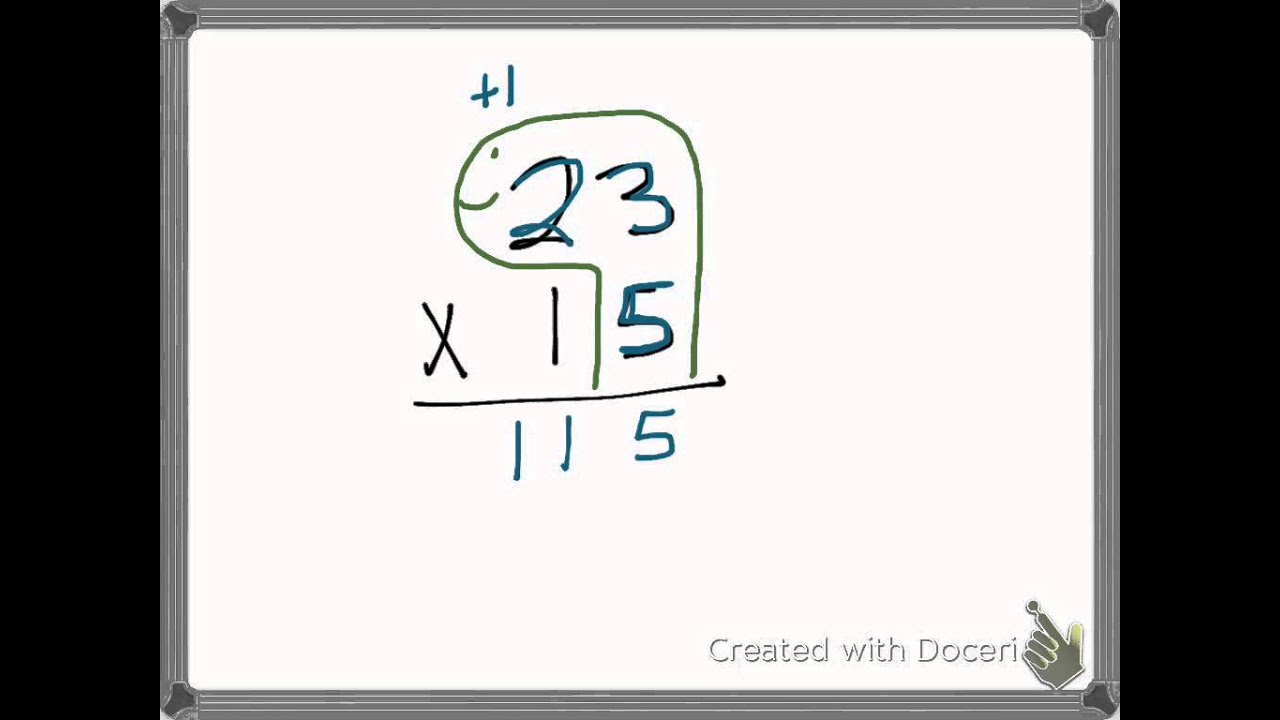
The lesson I created will review turtlehead multiplication for fifth grade students. I made several decisions regarding 21st century strategies, schema for learners, and the use of technology.
Specifically, I decided to incorporate problem-solving aspects to this lesson that go beyond the intended topic of the lesson. The students will be invited to, at first, solve large multiplication questions using any method they would like. They can then collaborate creatively with their classmates and share their own problem-solving methods.
Furthermore, I have individualized their education in this topic as needed. Specifically, those learners who can demonstrate mastery of the concept will be asked to move on an begin mastery of the next topic rather than waiting for their classmates to catch up. 
I have also prioritized communication in this lesson, as I will ask students to explain their methodology to their classmates after collaborating with them.
In terms of the schema I used in this lesson, it is intended for a subset of the class: those who have not understood the concept despite several lessons focused on this technique. I am reviewing this concept with them, as they cannot yet demonstrate mastery. For this reason, I believe it is important to shift this subset's thinking. Many of them have told me, "I'm not good at math" and "I just don't get this." I will be asking them to reframe these statement with a "yet," for example.
Although I relish the use of technology in the classroom in general, I will not be using technology in the main part of this lesson. We will be using the "old fashioned" whiteboards, and returning to work on the computers once they have demonstrated mastery of the concept.
As this is the first lesson plan I am attempting with this class, I am not yet certain what I may have overlooked. I'm certain that I will discover this shortly, as the students will likely be happy to help me figure it out! Sometimes I do try to pack in too many activities, but I don't want to have any "dead space" in my lessons, so I overplan as a rule. Problems could arise with this technique, though, if I don't allow enough time for the formative and summative assessments that will help me gauge the effectiveness of the lesson.
I also look forward to learning what works for classroom management with this particular group of students. They use Class Dojo, and I look forward to working with the points as deftly as my mentors do with this system.

Image retrieved from https://i.ytimg.com/vi/JwF6kfGZUeU/maxresdefault.jpg

Sunday, October 8, 2017

TEACH NOW M6U4A3: Teacher evaluation methods

There are many ways that teacher performance is evaluated by administration. This can look quite different between what happens at a private school versus what public schools require, but the end results are the same: a metric by which educators' effectiveness are evaluated.

In one school where I taught, fellow teachers and administrators floated through for observations on a drop-in basis. The results of the observation would be recorded, and the teachers agreed on the metrics by which they would be evaluated, but it lacked the formality that it seems many public schools use to evaluate teachers.

For example, in Ohio, teachers have two different potential metrics by which they can choose to be evaluated. One is a pure 50/50 split of "Teacher Performance to Standards" and "Student Growth Measures," and the other is a 50/35/15 split of those first two measurements, then an "Alternative Components" measurement for the last 15%.

The alternative components are quite interesting to me: they can include student surveys, teacher self-evaluations, peer review evaluations, student portfolios, and/or a district-determined component.


How I would like to be evaluated
In my first years teaching in a public school classroom, I would prefer to be evaluated by peer or administrator observation, and have a close relationship with a mentor who can help advise me as I seek to improve as a teacher.

The following is how I would like to be evaluated:

  • I would like to meet with the examiner before my observation to discuss my lesson plan and the current classroom dynamics. I'd also like to point out some elements of my teaching that I would like to improve, such as summarizing lessons and classroom management.
  • Furthermore, before the observation, I want to know from the examiner what they will be looking for in my classroom: what are the categories of teaching behaviors they are watching for.
  • I would like to prepare my class for the observation but letting them know ahead of time why the teacher is in the back of the room.
  • Ideally, I would like to schedule two classes to be observed. This will give the person evaluating my teaching to see a wider range of lesson plans, and allows for the events that throw off our learning (hello, fire drills) and generally gives a better idea of what happens in my classroom.
  • I would like for the observer to elicit feedback from students after the class as well, to ensure that what he or she has observed is the same thing that students have observed. If there is a problem, for example, the students might be able to help the examiner know if this is a chronic or occasional problem with my teaching.
  • I look forward to the meeting, discussing what the examiner has observed, and in what ways I can improve my teaching.
  • Three weeks, and then six weeks following the observation and subsequent feedback, I would like for an examiner to come and re-evaluate my work. Have I changed the weaker parts of my teaching, and how else might I continue to improve?
  • Furthermore, I would like to know how my students' performances stack up versus similar students within our school and at other schools. Are they showing their learning on par with their peers, or are there things I can improve about my teaching that would bring those scores up? 


Resources

"Teacher Evaluations" (2015) Ohio Department of Education. Retrieved from http://education.ohio.gov/Topics/Teaching/Educator-Evaluation-System/Ohio-s-Teacher-Evaluation-System

"New Teacher Survival Guide: The Formal Observation" (u.d.) TeachingChannel. Retrieved from https://www.teachingchannel.org/videos/preparing-for-formal-observations

Monday, October 2, 2017

TEACH-NOW M6U3A3: Parent Teacher Conference Strategies

Parent Teacher Conferences: Three Scenarios


Scenario I

Jessie is a fifth grade student whose parents have just received her fourth grade PSSA (Pennsylvania System of School Assessment) scores, and her parents are worried about the results. In third grade, Jessie scored in the "Advanced" range for both math and language arts, but Jessie has scored "Basic" in math with the latest round of testing, and "Advanced" again in language arts.

To prepare for this conference, I have obtained Jessie's PSSA scores for the last two years along with graphs that put the scores in context, and collected her math quizzes in the school year so far. (It is early October.) I have also printed out the state standards for fifth grade math, in order to provide the family with a road map for her math success this year.

This meeting will be conducted after school, and I will invite the parents to sit on the same side of the table as I am sitting.

The narrative of my presentation could be as follows:
I understand your concern about Jessie's test scores -- the PSSA is usually a pretty good indicator of how a student is learning, and seeing her move from "Advanced" to "Basic" is a concern for all of us. We'd like to see Jessie succeed in math, and I'm glad we have this indicator that there is an issue before we get deeper into the 5th grade year. 
I reviewed her PSSA scores, and what I noticed is that her ability to decode word problems seems to be the major stopping point. Her calculations are correct when she's asked for arithmetic solutions, but when she has to construct her own arithmetic equation in order to solve a more complicated problem, she is confused as to what to do. Based on this, I gave her a fourth grade test with word problems, and I see that this is a consistent issue.
How do you guys feel about this situation? Do you have any ideas why this is more difficult for Jessie, or things you've seen at home that help explain this? 

The next steps that I would like to take with Jessie are to (a) meet with her after school, in a small group of students with a similar issue, and have a kind of a "story problem club." And (b) I'd like her, at home, to review these types of problems on Khan Academy, and I've linked to her Khan Academy account so I can follow her progress. Also, before this year's PSSA, she and I will do some "warm-ups" to make sure all of the concepts stick with her when she goes in for the testing.


Scenario II

Dillon has not been performing to the level of his capacity, and this meeting is taking place in the context of regular fall parent/teacher conferences.

Dillon is a sixth grade student who generally gets B's and C's, but is capable of higher grades. He "coasted" through elementary school, passing his tests without trying, but he will to better demonstrate his understanding as he advances through middle school.

In this case, I will show Dillon's work recently in science, where the whole class was asked to create Google Slides presentations about mammal fossils. I will redact the names of two of Dillon's classmates, and show his parents what other students have created, as the different is marked.

I will also show his quizzes, and several sections where he decided halfway through the quiz to stop answering in complete sentences.

I will conduct this meeting in the classroom, in a relatively informal setting, sitting on the same side of the table. I will also invite Dillon's math teacher, who will join us and bring a few of his recent homework assignments.

The narrative of my presentation could be as follows:

Dillon is a delightful student in general, and he participates well in class discussion. He shows an excellent understanding of the subjects we are covering, but when it's time for him to demonstrate his understanding, he tends to zone out and do the minimal work required. He doesn't like to explain his work.
In math, Dillon is doing the same thing. He shows a good understanding in class, but seems determined to do the minimal amount possible to pass the test. He really doesn't like to explain his work, but he's going to need to, in order to perform to his capability.
Where do you think this is coming for Dillon? Are there things you've seen at home like this, in which he doesn't take things to fruition? Do you have any ideas how we can help him with this? 

The next steps for Dillon can be to require him to complete tests before he leaves the classroom, and allow him extra time during study hall if necessary. Also, for his parents to require him to complete pre-tests that have more extensive answers written in them. Dillon needs to practice bringing his expression of knowledge to completion, even if it doesn't feel "necessary" to him.

We will plan to meet again in three months to check on Dillon's progress, to be sure he's ready to take on seventh grade. In the meantime, his parents can use Schoology on a weekly basis to review Dillon's work together with him.


Scenario III

Cara is a fourth grader who is new in school, and she has been lashing out at her classmates, sometimes physically.

I will be prepared with a list of the incidents -- only the ones that was witnessed and documented by an adult, as well as transcripts of the conversations I have had with her about the incidents. I will also include her own explanations of how the incidents came to pass.

We will meet in neutral ground, in the empty playground, on the same side of a picnic table, while a substitute teacher manages the class. 

The narrative of my presentation could be as follows:
I'm concerned about Cara's ability to connect with her classmates. I've noticed several times that she gets into a conflict with her classmates, when there doesn't seem to be a precipitating event. She seems pretty upset since she arrived, and she isn't sure how to connect with her classmates in a productive way.
For example, she hit one of her classmates when he was passing her a recorder for music class. Her first impulse was that he was trying to hit her with the recorder when he was calmly passing it to her. She apologized for the incident, but she was pretty sure that he was trying to hurt her first. 
Is there anything she has told you at home about her transition to this new school that could help me make her feel more comfortable here? I would like to help her form positive relationships with her peers, and I would love to know what usually helps her make good connections, socially. 

The next steps for the meeting are for her parents to open up a dialogue with Cara about what has been happening at school and to email me with their thoughts after talking with her. Furthermore, Cara will need to have a behavior plan at school, since she has been physically lashing out. I will work with the vice principal on creating a behavior plan and discussing it with Cara in as gentle a way as possible. Since the aim is to help Cara feel more comfortable at school, the last thing we want is for her to feel "punished" or unwelcome, but the physical lashing out is unacceptable, and a safety issue for her and other students.

Furthermore, Cara's parents will ask her about students at the school that she would like to get to know, and I will work to figure out a few likely kids for her to meet. Once some good potential friends have been identified, Cara's parents will invite them over for playdates, and the school counselor will host weekly, informal lunches with Cara and the other students.

Cara's parents and I will re-connect about her progress in three weeks, once these programs have been instituted.


(All of these scenarios were based on fictional students.)


Parent teacher conference image retrieved from https://flstudentsachieve.s3.amazonaws.com/CMS/18217/parent-teacher-conference__listing.jpg

Monday, September 25, 2017

A warning about pre-assessment: you may know better than the numbers

When I was teaching sixth grade in California, I had two students who were attached at the hip. For the purposes of this story, I'll call them Betty and Veronica.

Betty and Veronica did everything together -- they often wore matching outfits -- and they felt lucky to be in the same math class, although they fretted that they weren't in the same math group.

The problem? Math came more easily to Betty, and Veronica often struggled with the subject -- therefore, after each pre-assessment, they would be visibly distraught each time they were placed in separate math groups.

"What could this score mean?"
I knew that Betty was quite capable in math, so imagine my surprise when -- halfway through the year -- the computer sorted her into the "lowest" math group as we entered our unit on Integers. I had seen some of her work on this subject, and I looked at that score like the RCA dog.

After some hours of denial, I finally admitted it to myself: Betty had purposely done poorly on the pre-assessment. She and Veronica had planned Betty's "flunking" of the test, so that they wouldn't be separated into different math groups again.

My suspicion was confirmed when I announced the math groups -- when I placed Veronica in that lowest math group, but sent Betty to the higher ability group, they looked at each other in shock. Their plan hadn't worked.

I learned my lesson that day: pre-assessments can be "gamed." Sometimes I need to look up from the numbers and instead use my "spider sense" to determine where the students really need to be.


Image retrieved from https://upload.wikimedia.org/wikipedia/commons/b/bd/OriginalNipper.jpg

Friday, September 22, 2017

TEACH-NOW M6U2A3: Pre-Assessment in a Sixth Grade English Language Arts Classroom

Pre-assessment is an essential tool I plan to implement in a middle school ELA setting.


I will start with a summary of what students in Pennsylvania should be able to do by the end of their sixth grade year:

  • Summarize texts
  • Determine authors' points of view and examine their claims
  • Understand structure, inferences, story arcs
  • Learn how to acquire new vocabulary
  • Understand informational texts
  • Compare literary experiences (written stories vs. performed dramas vs. spoken word) 
  • Read independently at grade level
  • Write informative texts and reporting on research projects
  • Write with an awareness of stylistic aspects of composition and conventions of language
  • Write to state and support an opinion in a formal style
  • Write narrative texts using a variety of narrative techniques
  • Edit work for additional clarity and higher quality texts
  • Use technology to collaborate and communicate without using plagiarism 
  • Present and listen appropriately in formal speaking situations 
In order to teach every student at his or her level, I plan to pre-assess students throughout the first few weeks of sixth grade. 

If I know where the students are, I can better understand how to bring them to the "finish line" with these standards, and, furthermore, I will have a better understanding of which students will require differentiation throughout our program.

There are several existing pre-assessments that I could use to ascertain students' general grammatical and vocabulary abilities. For example, School on Wheels developed a sixth grade pre- and post-assessment that covers the basics quite well.

Excerpts from their pre-assessment include questions based on textual evidence such as:

8. What is Elijah’s main problem in the story? {Be Able to Read and Comprehend Grade Appropriate Texts | CCSS RL.5.10, RL.5.2, RL.5.4} a. The key his mother needs is old and rusty. b. He is angry because his mother made him leave the city. c. His mother no longer talks to him. d. He does not want to come home when his mother calls him.

Other examples are questions that test a student's ability to infer unit from contextual clues, such as:

14. What does the word "elaborate" mean in the sentence below? {Determine Meaning of a Word Meaning through Sentence Context | CCSS L.6.4.A & R.I.6.4} The teacher asked Russel to elaborate on his reasoning because she thinks it’s vague and unclear. a. Expand b. Complicated c. Fancy d. Simple

In addition to this type of basic pre-assessment, I would want to perform deeper tests to ascertain my students' current ability to work toward these standards. 

Rather than bombarding students with multiple hour-long tests at the beginning of the year, I would plan to execute these pre-assessments as a series of entrance tickets, and small assignments in the first few weeks of school. I would pluck through the standards listed above and give small bites of a larger pre-assessment as the students enter the classroom throughout September.
The tasks within this pre-assessment will map to the above-listed standards. These are my suggested pre-assessments for this purpose:

  • Students will read a news story from that morning's newspaper, and summarize it in three to five sentences
  • Students will read two opposing editorials regarding a high-interest topic (such as later start times in schools) then summarize each author's point of view.
  • Students will create a story "map" of a well-known fairy tale.
  • Students will make a Venn diagram of written stories, performed dramas, and spoken word presentations.
  • Students will list the last two books they read "for fun" and then explain how much they enjoy reading in general. (They will be presented with a rainbow, and they can choose how they currently feel about reading for fun. Red means "I can't live without reading," and Purple means "I only read when I absolutely have to.")
  • Students will write a quick "how to" about a topic of their choice, such as "how to get ready for a hockey game" or "how to take the bus to my Grandma's house." 
  • Students will read a passage and highlight the parts that are grammatically incorrect and/or poorly supported by evidence
  • After reading several letters to the editor in the local newspaper, students will spend 10-15 minutes sharing their opinion on a topic that is important to them. 
  • Students will be asked to edit a tragically terrible paragraph, such as this paragraph provided by K12 Reader
  • Students will be asked to collaborate with one classmate on a silly, short limerick, and share it with the class. (This is in order to test their ability to connect with classmates on an application such as Google Docs, and to collaborate in the most basic way.)
  • Students will write and perform a brief opinion-based speech about their favorite animal. They will have just five minutes to silently research the animal before giving a two-minute presentation. This is a miniature test of their ability to perform in a speaking situation.
For the purposes of this discussion, I will focus in on the "tragically terrible paragraph" pre-assessment, and how the results of that pre-assessment will guide my teaching throughout our unit focused on the revision and editing process.

Assuming I have a class of 22 students, I will prepare for 5 students who have already mastered the sixth grade standard for editing, and are ready for a bigger challenge. I will prepare for 12 students who are approaching the standard, and are ready for sixth-grade level teaching on the subject, and I will furthermore prepare for 5 students who are well below the standard, and may have limited knowledge of the topic.

As a group, we will discuss revision as the process of making a written work better, and editing, the process of making a written work right. We will review what we problems we look for when we revise, and what results we look for when we edit.
We will then break into three groups, with different assignment, all working toward meeting the same standard.

Plan for Advanced Students
These students have caught every error and correctly edited it in the pre-assessment. Some of these students have even found additional errors or suggested unexpected revisions. These students will be challenged to revise and edit on an entirely new, unexpected level. Specifically, they will be challenged to take the first chapter of a book they know well, such as Harry Potter and the Sorcerer's Stone, and revise it. What could have been done to improve this famous work of fiction?

These students will be able to understand that revision and editing is a process that can continue, even when a piece seems "perfect." There are multiple ways to present information, and they can dig straight into this tough piece -- at first by printing out the words and cutting the paragraphs into pieces, then by re-placing them in the text.

Plan for At-Grade-Level Students
These students will approach a few additional "tragically terrible texts" provided by the teacher, and use highlighters to identify additional edits and revisions that the author could make in order to improve the piece. They will be broken into "jigsaw" groups, and asked to look for very specific problem areas in small groups, such as lack of details, repetition, unnecessary verbiage, misspellings, grammatical issues, and finally, the order of the paragraphs. Could they find ways to rearrange the paragraphs themselves for better effect? They will, like the advanced group, eventually use scissors and glue to rearrange a fictional work for best effect.

Plan for Below-Grade-Level Students
These students will start with sentences at first -- they will compare two similar sentences, and choose which one is the best presentation of the text. They will be challenged to determine why one sentence is better than the other one. They will then compare paragraphs -- they will discuss which is the better constructed paragraph, and why?

Then this group will start with a tragically terrible short paragraph, and look for the same kind of errors they found in the inferior sentences. They will be tasked with finding a certain number of errors. After they have discovered all of the errors, they will each work individually to re-write the paragraph with the edits in place.

The larger revisions will be done as a group, from the same text that the At-Grade-Level. They will do popcorn reading and work together to manipulate the text, with the assistance of a teacher at a SmartBoard, to find the best fit for all the "puzzle pieces."


All 22 students should be able to meet or exceed the standard by the end of the lesson, which may stretch one or two class periods. This lesson will be done early in the school year, as the skills to revise and edit will come in handy throughout their sixth grade English Language Arts adventures. 

The assembly of these groups may vary from day-to-day, based on how they perform on pre-tests. For example, a student who was working with the Advanced Group in the above lesson may be Below-Grade in the opinion-based speech lesson. Therefore, these groups will remain fluid throughout the year, and it may be in some cases that members of the three groups will be deliberately mixed in group projects, so they can mentor and learn from one another throughout the year.

If I'm doing my job right, their sixth grade year in English Language Arts will be an ever-changing adventure!


References

6th Grade Pre- and Post-Assessment. (u.d.) Retrieved from https://www.schoolonwheels.org/wp-content/uploads/2017/05/6th-Grade-ELA.pdf

Alber, R. (2016, February 22) 4 Strategies for Teaching Students How to Revise. Retrieved from https://www.edutopia.org/blog/4-strategies-teaching-kids-how-revise-rebecca-alber

Editing and Proofing a Paragraph (u.d.) Retrieved from http://www.k12reader.com/worksheet/editing-and-proofing-a-paragraph/view/

Pennsylvania Department of Education. (2014 March 1) Academic Standards for English Language Arts: Grades 6-12. Retrieved from http://static.pdesas.org/content/documents/PA%20Core%20Standards%20ELA%206-12%20March%202014.pdf

Image of students working in a group retrieved from http://www.evidencebasedteaching.org.au/wp-content/uploads/2015/06/group-work.jpg

Image of students reading a newspaper retrieved from http://www.startschoolnow.org/wp-content/uploads/campus-newspaper.jpg

Image of the "Revise vs. Edit" chart retrieved from https://i.pinimg.com/736x/95/85/09/958509ee4691642a7c0a80a3fc25f864--writing-tips-creative-writing.jpg

Monday, September 18, 2017

TEACH-NOW M6U1A3: High Stakes Assessment Comparison of College Entrance Exams in the United States and Germany

American students taking the SAT
In the United States, students are generally required to take at least one college entrance exam in order to apply to college. 

These include the SAT and ACT, and many colleges also ask to see students' AP test scores and SAT subject test scores as well. The preparation for these tests can be overwhelming, at best, and can drive students in the United States to withdraw socially and hyper-focus on attaining the highest score possible. (CBS Miami, 2013) 

Students in the United States will commonly take special test preparation courses, hire tutors, give up extracurricular activities, and spend all of their spare time drilling information in preparation for these many tests. 

All of this preparation can also be costly, and on top of that expense, there are the test fees themselves: about $60 for the ACT, $60 for the SAT, and $94 for every AP test a student takes.
The high stakes of these college entrance exams aren't just for the students, but teachers, schools, and districts can also be judged by the exam scores and similar state college readiness exams of their students. (Svab, 2013) Therefore, there can be an immense amount of pressure on not only each student, but also their families and schools, for that student to score well.

The German system

In Germany, there is one (free) final exam at the end of a university preparation student's high school career, and that is the Abitur. Although the Abitur is the most "high-stakes" that a high school exam can be, German students seem to experience less stress surrounding this exam, as it is simply the culmination of their years of concentrated study, and a long-term curriculum specifically designed to prepare German students to take this exam. 

As is shown in the below diagram, the Abitur is what all German Gymnasium students work towards in their academic careers: this one test needs to encompass all of their learning from the first through twelfth class. (Gymnasium schools are the university preparation schools in Germany, and German students are separated into Gymnasium schools anywhere from fifth to seventh grade.)


A diagram of Germany's education system


It's also worth noting that not every student in Germany takes the Abitur. Although the number of students taking the Abitur has increased since the 1970's, students who graduate from Realschule or Hauptschule are not expected to take the Abitur, but to attend a professional school or begin an apprenticeship. This means that unlike in the United States, most students in Germany are not spending their high school years preparing for a college entrance exam.

Specifically, as of the year 2000, only 11% of jobholders in the country of Germany had taken the Abitur. By contrast, in October 2016, almost 70% of high school graduates were enrolled in colleges or universities, almost all of whom require some form of college entrance exam. (Bureau of Labor Statistics, 2016)

It's therefore possible to speculate that the extreme anxiety that American students (and their parents, as well as their teachers) experience surrounding college entrance exams may in some part be because those students are ill-prepared for the exams, having not been on a college preparatory track since fifth or sixth grade as German Gymnasium students are.

Abitur schools vary from state to state
Some recent studies in Germany have revealed a large gap between the percentage of students scoring very high (1 is the "highest" score) in the different states of Germany. When students score well on the exam, it reflects directly on their teachers, and, in turn, their state schooling system. Therefore, it may benefit some German states to administer a slightly easier Abitur to their students, in order to bolster their image in the view of the country. ("Abitur lottery sparks tougher exam debate" 2015)

German students taking the Abitur


Test taking pressureIn the past, the Abitur was an even more "high stakes exam" for German students -- one that could cause real devastation as a result of not taking or passing the exam at the end of Gymnasium. The most exaggerated case is the young man who shot several people in Erfurt, Germany in 2002 because he was expelled from school before taking his Abitur, thus negating his career possibilities. ("How a school shooting" 2017) Since that time, Germany has changed their laws to allow students to apply for placements at vocational schools without an Abitur

How Gymnasium teachers benefit
With such a high-stakes exam looming for German students, it is surprising to see that teachers still enjoy a great deal of freedom as they teach subjects that will be included in the Abitur. German schools generally do not require teachers to adhere to as strict a curriculum as they do in the United States, so teachers who have taught in both countries find that they do far less "teaching to the test" in German than they do in the United States. ("Why you should teach" 2014) You see, for German teachers, their class is just part of the greater picture, equipping students to score well on the Abitur, rather than a "means to an end" in itself, with a district-wide high stakes test at the end of their specific class.

Shortened preparation time not a factor
Another "stressor" that had been cited by German students and their parents has been that in recent years, the time students spend in Gymnasium has recently been shortened by a year. (There used to be a 13th grade in most schools.) Students and their parents were afraid that their Abitur-related stress would be heightened by this change, but recent students have shown this not to be the case. (Minkley, Rest, Terstegen, Kirchner, Wolf, 2013)

The crux of the difference between the two systems These are just some of the differences between the high-stakes tests administered by the United States and German government to their college-bound students. Since fewer German students go to what Americans would consider a "traditional college," fewer of them take their one, large college readiness exam. And since the German Gymnasium students' preparation has taken place since fifth grade, there seems to be considerably less stress associated with taking this test.


References
Abitur lottery sparks tougher exam debate (2015, June 10) Retrieved from https://www.thelocal.de/20150610/abitur-germany-education-standards-quality

Minkley, N., Rest, M., Tergersten, S., Kirchner, W.H., Wolf, O.T. (2013) Mehr Stress durch G8? Akute und chronische Stressbelastung von Abiturienten mit regulärer und verkürzter Gymnasialzeit. Retrieved from https://www.researchgate.net/profile/Nina_Minkley/publication/283638318_Mehr_Stress_durch_G8_Akute_und_chronische_Stressbelastung_von_Abiturienten_mit_regularer_und_verkurzter_Gymnasialzeit/links/575e711408ae9a9c955c2472.pdf

Svab, P. (2013, November 22) State Education Chancellor Defends Teacher and School Evaluations. Retrieved from http://www.theepochtimes.com/n3/367782-state-education-commissioner-defends-teacher-and-school-evaluations/

Students Go To Extreme Measures to Get Higher Test Scores. (2013, November 17) Retrieved from http://miami.cbslocal.com/2013/11/17/students-go-to-extreme-measures-to-get-higher-test-scores/


Trines, S. (2016, November 8) Education in Germany. Retrieved from http://wenr.wes.org/2016/11/education-in-germany

Why you should teach English in Germany (2014, April 14) Retrieved from https://www.thelocal.de/20140414/why-you-should-become-an-english-teacher-in-germany

U.S. Bureau of Labor Statistics (2016) College Enrollment and Work Activity of 2016 Graduates. Retrieved from https://www.bls.gov/news.release/hsgec.nr0.htm

Diagram of the German education system retrieved from https://upload.wikimedia.org/wikipedia/commons/2/2e/German_School_System.png

Photograph of students taking the Abitur retrieved from https://www.thelocal.de/userdata/images/1433933587_abitur%20exam.jpg

Photograph of students taking the SAT retrieved from http://static4.businessinsider.com/image/55706c30eab8eac25fc67cd0-1190-625/the-best-piece-of-advice-for-taking-the-sat-is-shockingly-simple.jpg


Friday, September 8, 2017

TEACH-NOW M5U5A1: Incorporating Multicultural Perspectives in a Lesson Plan

Incorporating multiculturalism in an English Language Arts classroom is not a one-time lesson about immigration, or simply the incorporation of a reading of Sandra Cisneros's The House on Mango Street. Multiculturalism has a place in everyday lessons in every middle school.

Lessons in a English Language Arts curriculum can reflect the diversity of our community, region, country, and world throughout the school year in several ways:

1. Going beyond the language. When a grammar textbook details the proper way to form a sentence and conjugate a verb, some students may find that the language spoken by their parents or others in their community doesn't map with what the textbook says. This is an important moment for a conversation about dialects. The version of English taught in the textbook is considered by linguists to be the "Language of Opportunity" in our country (and many other countries), but that may not be the version of English spoken at the students' dinner table. Acknowledging this with students helps bridge a potential cultural divide.

2. Including texts beyond the ordinary. Every year, a new crop of young adult novels come out, many by people of color, describing their experiences. It's important not to always fall back on the same set of books in the storeroom, and keep options open. If there is a new book by a writer of color, one that is capturing the imagination of middle school students, it may be time to set "Bridge to Terabithia" aside for the time being, and pivot the lesson plan to include this new book.

3. Invite other languages into the classroom. English Language Arts doesn't always need to be about English. The literature and languages of other cultures can be a part of lessons in many valuable ways. For example, when a character in a book decides to speak Spanish instead of English when she's interacting with a new friend, what does that say about the role language has in her life, and our lives? 

4. Invite other countries into the classroom. There is no restriction that says that poetry, articles, and books that are part of an English Language Classroom must have originated in the English language. So many good books exist in translation, and can be an important way to bring voices from other countries and cultures into the discussion with students. Students can draw comparisons and contrasts with the stories written in other languages, as that literature may provide a better lens through which to view another culture.

Why is this important?
It is important to introduce students to this kind of multicultural content and multiple perspectives in the curriculum for two reasons. 

First, some of the students themselves may be from another culture. Acknowledging that difference by including writers from their culture may go a long way toward engaging those learners. Furthermore, even if a piece of literature in the curriculum does not represent the culture of English Language Learners in the classroom, it may be helpful for them to see that not all writing originates from a Eurocentric, white perspective. Including a writer from Africa, for example, discussing her problems in attending a mostly-white college may resonate with an Asian student who feels similarly isolated in her school.

Second, even if a classroom is relatively homogeneous, representing students of one color, teaching them to go deep and empathize with characters from other cultures -- to determine their differences and similarities, and see the kind of situations they encounter can go a long way toward fostering empathy, an important 21st century skill.

How to assess whether it is working
On the surface, it may be somewhat difficult to determine whether a student is developing cultural competence in the classroom. It may be possible, though, through various forms of formative assessment, to see a change in a student's perspective. To that end, it may make sense to give a cultural competence "pre-test" at the beginning of the year. Ask students to discuss what literature they know from other cultures, and, more importantly, what they think they may learn from studying literature from cultures that may be quite different from their own.

This conversation can continue throughout the year, with additional formative assessments -- even something as simple as asking students to write three words on a whiteboard and hold it up as they answer the question: "Why is it important to read books by writers outside the United States?"

Finally, at the end of the year, the teacher can perform a type of "post-mortem" with a final assessment, asking students to give feedback on the multicultural lessons they learned throughout the year. If students demonstrate they have developed cultural competence in addition to what they demonstrated at the beginning of the year, then the teacher is on the right track. If the needle hasn't moved, it may be time to double down on multicultural curriculum, and touch base with other teachers who have mastered the art of including it in the English Language Arts classroom.


References
Garcia, E.K, "Multicultural Education in Your Classroom" Teachhub.com. Retrieved from http://www.teachhub.com/multicultural-education-your-classroom 

Inflatable globe image retrieved from https://cdn-rainbowresource.netdna-ssl.com/products/024310.jpg


Sunday, August 27, 2017

TEACH-NOW M5U3A2: Differentiating For and Anticipating Student Needs (Post includes flowchart link)

I may discover, as I use formative assessments to test students' progress in my lesson plan, that some students just "don't get it." Likewise, I may have some students who instantly "get it" and are ready to move on.

When I'm aware of students like this who require differentiated instruction, I should tailor both my lessons, and my assessments, so that the student never needs to experience the "I don't get it!" panic, or, on the flip side, the disengagement of the understimulated advanced student.

Students for whom differentiated instruction would be appropriate
I will illustrate my decision-making process by first choosing two common topics that merit differentiation: dyslexic students and English Language Learners.

Dyslexic students may understand everything that is being said -- rarely is there a problem with intellectual delays in dyslexic students -- but when they are asked to read, they simply need more time or assistance in order to keep up with the rest of the class.

The issues of dyslexic students dovetail into the needs of English Language Learners in that they need more time with reading, but ELL students will also generally need more time to understand what is spoken as well. They may need extra time and multiple methods by which to decode the instruction I am giving.

Several strategies may assist both of these learners throughout my lesson. These can include providing one step directions at a time. Instead of "powering through" with a series of directions (which is usually my natural inclination), I give one direction at a time to the class. According to Angie Stevens, an education researcher for Reading Horizons, spacing out directions for students with dyslexia helps because dyslexia is, at its heart, a processing disorder, and giving directions one at a time can greatly reduce students' frustration.

I can also provide both written and oral instruction in the class when that is possible. I can preview content, perhaps the day before a lesson, or just before I give the lesson, so that these students have extra time to prepare for what will be taught. Both dyslexic students and English Language Learners are likely going to require assistance with note taking as well. I can provide graphic organizers for this purpose, or I may discover that another student in the class would benefit from being a designated note taker for these students. 

Modification Plan for Struggling Students and Those Grasping Material Quickly
Although it would be ideal, through the above-mentioned methods, to have anticipated and adequately prepared for students' different needs in my classroom, I may discover through my formative assessments that some students are not understanding the content, and others are grasping the material quickly. It is up to me to include those students by differentiating the instruction for them.

(Note: I will hereby refer to specific examples for a sixth grade English Language Arts lesson related to "digital footprints" for sixth graders. This differentiation would take place for other types of lessons, but as I am preparing for this particular lesson, my examples will be specific to the digital footprint lesson.)

Specifically, in the case of a student who just isn't "getting it," I would need to determine what, exactly, the student isn't understanding. 

In the case of this lesson, as I dive into the discussion of Twitter, Snapchat, Facebook, and Instagram, I may determine through my formative assessments that some students simply aren't familiar with these applications. Most sixth graders are familiar, but an English Language Learner, or a student with less access to technology, may not be ready to discuss these applications simply because they're unfamiliar.

If this is the case, I would stop the lesson and ask for student volunteers to explain, and demonstrate, the applications. This may take more time that I have allotted for the lesson, but an understanding of the applications is key to understanding the concept of a digital footprint. (We will use my personal Twitter, Facebook, Snapchat, and Instagram accounts to make the point, so they have an example of a very "clean" account with no questionable material.)

This may be an excellent opportunity, as well, to include students who absolutely "get it" and are ready to move on. They can lead the discussion about the applications with their classmates, and give examples from their own social media experiences when applicable. I will also ask these students (on a voluntary basis) to assist students such as the aforementioned dyslexic student or an English Language Learner to assist with reading and/or note-taking during the lesson. These partnerships can make sense.

I can also challenge the advanced students to step outside and create fictitious posts -- both well-advised and poorly-advised -- and lead the "Four Corners" activity for their classmates later in the lesson. (In which the students move from corners 1-4 in order to express how certain photos and posts might reflect on the person posting them.

More difficult for me would be a student who isn't "getting it" because they aren't understanding the notion of developing a "reputation" for oneself via social media. The idea that there would be future benefits and drawbacks to some posts may not "click" with some students. I will better discover this when I see how students move within the Four Corners formative assessment.

[Explanation of the Four Corners assessment: Students will rate posts and photos by moving around the room between Corners 1-4. A "1" means that potential friends, colleges, and employers would be very turned off by it, and a "4" means that potential friends, colleges, and employers would be very impressed by it. For example, a photo of a person burning a flag would rate a "1" and a post with a compliment to a local hamburger joint would be a "3."]

If I see that students are going to the "4" category when presented with an insulting or inappropriate post, it may be time to stop and discuss further before continuing the assessment. I could as a volunteer from the "4" category to explain why they thought the insulting post would be impressive to others, and someone standing in the "1" category to politely debate the point with them. This may turn into a rather lively discussion, but ideally this could be a teaching moment with memorable results. 


Four resources to assist students who are dyslexic and/or English Language Learners in this activity

  1. Content-oriented. One thing that a dyslexic student and and English Language Learner have in common is needing more time to decipher written materials, in general. For this reason, these students will have more photos instead of lengthy posts to discuss. The discussion focus, for these students, will be on photos and short easily understood posts, rather than long written rants that sometimes occur on social media.
  2. Process-oriented. Videos to watch the night before. The entire class will be asked to watch 1-2 videos the night before our digital footprint lesson. This will be particularly emphasized for the dyslexic or English Language Learner students, with an email to their parents the day before, including the links to the videos, so that they will be sure to preview -- at least once -- the materials before the rest of the class discusses it.
  3. Learning environment-oriented. Posted words and phrases. The day before the lesson, and throughout the lesson, the most important vocabulary and brief synopses of content will be posted on the board. These will include the names of the applications, the words "Digital Footprint" and phrases such as "Your REPutation Precedes You" (many students may know the word "rep" instead of reputation!) and "Your Dream Employer Is Watching!" for all to see on the walls of the classroom. According to 
  4. Process-oriented. Allowing Think Time. Sometimes in my haste to cover all topics in a lesson, I fail to allow students crucial "Think Time." They may not be ready with an answer right away, so if I give them a chance to "cogitate" on the subject, this will help not only my struggling learners, but every student will have a chance to give a more intelligent response if prompted to think silently for a minute before answering questions in this lesson.


References


Finley, T. (2015) "Strategies and Resources for Supporting English-Language Learners" Retrieved from https://www.edutopia.org/blog/strategies-and-resources-supporting-ell-todd-finley

McCarthy, J. (2014) "3 Ways to Plan for Diverse Learners: What Teachers Do." Retrieved from: https://www.edutopia.org/blog/differentiated-instruction-ways-to-plan-john-mccarthy


Stevens, A. (2013) "8 Classroom Accommodations for Dyslexia (That Benefit ALL Students)." Retrieved from http://www.readinghorizons.com/blog/post/2013/04/12/8-dyslexia-accommodations-for-students 


"Strategies for Teachers." Retrieved from http://dyslexiahelp.umich.edu/professionals/dyslexia-school/strategies-for-teachers

Image sources


"Girl who doesn't get it" retrieved from https://i.pinimg.com/originals/5d/35/95/5d35959fd06a11fb2c246261f7d0f41d.jpg


"'Yet' quote" retrieved from https://blogger.googleusercontent.com/img/b/R29vZ2xl/AVvXsEjPV6CxZa6xwuW7_j2Rx-MMOcEb9EvENGsenev7S2O9CAGKMAqOsczBOZdUKziDku03OZ9KYgj6prQ1MBhVGLPnQbxBBIS45wk-YLKttDZxv4tO4YXcF5kDvXVJvTnQzH3LqH31nphST_g/s1600/Screen+Shot+2015-05-01+at+8.21.52+am.png

Monday, August 21, 2017

TEACH-NOW Research Post Kain U2A1: Gender inequality internationally and nationally

In my research regarding gender disparity in education, I learned that international organizations such as UNICEF are working on a wildly different problem than national organizations: although their problems are related. Both international and US-based groups use the term "girls' empowerment" (UNICEF, 2015) but this term can mean everything from subtle to severe, depending upon which country we are discussing.


The international crisis of gender disparity in education
According to UNICEF (2015), there are deep-rooted problems in many of our world's societies that prevent many girls from ever entering a school. The statistics they cite are striking, with parts of Asia having the biggest parity. Specifically, they cite this statistic: "80 per cent of (South and West Asia's) out-of-school girls are unlikely to ever start school compared to 16 per cent of its out-of-school boys."


Furthermore, there are critical societal reasons that this kind of gender disparity is a critical issue for UNICEF:
Recent estimates show that one-third of girls in the developing world are married before age 18, and one-third of women in the developing world give birth before age 20. If all girls had secondary education in sub-Saharan Africa and South and West Asia, child marriage would fall by 64 per cent, from almost 2.9 million to just over 1 million. 

UNESCO's position statement echoes UNICEF's priority: "UNESCO is committed to promoting gender equality in and through education systems from early childhood to higher education, in formal, non-formal and informal settings and in all intervention areas from planning infrastructure to training teachers." (UNESCO, 2017)

To that end, UNESCO has a specific initiative entitled "the Global Partnership for Girls’ and Women’s Education." I was interested to learn from UNESCO's website that the two most troubled aspects of global education for females are secondary education and literacy. These two topics are such a "given" for girls in the United States that it's troubling to hear how uncommon these are for women in many countries.


Gender Disparity Issues in the United States
Nationally, I found a topics regarding gender disparity discussed by education organizations, in particular the need for girls to be encouraged in more lucrative STEM careers.

According to the NEA, for example, "girls are five times less likely than boys to consider technology-related careers." They also found data that surprised me, such as "children's science programs feature three times as many male characters as female characters and twice as many male scientists as female scientists." (NEA, 2008, p.2)

Specifically, in their policy brief, NEA states their position, tending toward total gender equality: "Even with the changes that have come about under Title IX, research confirms that traditional gender-based stereotypes and inequities still exist and are still limiting the academic and social development of both females and males... NEA supports educational settings where both females and males flourish."

The AERA also highlights trouble research regarding math, in particular, and how boys and girls are achieving statistically. In particular, they noted that kindergarten-aged children, a math disparity develops early. Specifically, they discovered that despite some findings that 
Teachers consistently rate girls’ mathematical proficiency lower than that of boys with similar achievement and learning behaviors. Gender differences in learning approaches appear to be fairly consistent across the achievement distribution, but girls’ more studious approaches appear to have more payoff at the bottom of the distribution than at the top. Questions remain regarding why boys outperform girls at the top of the distribution, and several hypotheses are discussed. Overall, the persistent ECLS-K patterns make clear that girls’ early mathematics learning experiences merit further attention. (Cimpian, Lubienski, Timmer, Makowski, and Miller, 2016)
Diving into the AERA's website was particularly fascinating since it relies solely on statistical research to back its findings, rather than trends or news stories. It seems like an excellent place to find reliable information as to whether certain educational strategies or demographic trends are supported by appropriate research.

My reflection
I find the dissimilarity between the national issues surrounding gender disparity versus international issues quite striking. 

While I feel lucky to be teaching in the United States, where our biggest "problems" are teachers' perhaps subconscious preference to push math and other STEM topics with boys, I feel driven with new purpose toward educating more of the worlds' women at an appropriate point of my career.

I noticed that several national organizations for educators, including the AFT, have specific stated directives toward worldwide education The AFT specifically directs its members to take on several initiatives to promote education for girls in other countries. 

It is heartening to see educators in the United States take the issue of global girls' education to heart, as well as take our own remaining disparities seriously.

I am also inspired to learn more about Title IX and how that continues to affect education in the United States.
************************
References
"AFT Resolution: Girls and Young Women's Education," 2016. Retrieved April 27, 2017 from
http://www.aft.org/resolution/girls-and-young-womens-education

"Have Gender Gaps in Math Closed? Achievement, Teacher Perceptions, and Learning Behaviors Across Two ECLS-K Cohorts," , October 26, 2016. Published in 
"AERA Open."

"Girls Education and Gender Equality," Global Partnership for Education
Retrieved April 26, 2017 from http://www.globalpartnership.org/focus-areas/girls-education

"Mathematics and Science for Every Girl and Boy," NEA Policy Brief 2008, Retrieved April 26, 2017 from http://www.nea.org/home/36073.htm

"Women and Girls' Education," UNESCO, undated. Retrieved April 26, 2017 from nhttp://en.unesco.org/themes/women-s-and-girls-education

"Girls' Education and Gender Equality," UNICEF, July 23, 2015  
Retrieved April 27, 2017 from https://www.unicef.org/education/bege_70640.html

"Bias and Stereotypes Sideline Girls in STEM," NEA Today, http://neatoday.org/2015/10/15/bias-and-stereotypes-sideline-girls-in-stem/


Reflections of a General Ed Teacher's Role in Special Education (TEACH-NOW Assignment)


As I prepare to become a public school teacher in Pennsylvania, it is imperative that I understand the process by which we refer and educate special education students within our schools.

It was my experience growing up in Bethel Park, Pennsylvania, that few "special education" students attended school in "general education" classrooms. This was before the days of IDEA (Individuals with Disabilities Act) which guarantees special education students accommodations in the LRE (Least Restrictive Environment) possible.

What that means is that I will likely have special education students in my classes, and that I may also need to refer students for special education services throughout my teaching career.

I experienced this when I taught in a public school in California. What I saw were students who were able (with the help of an instructional aide) to join the classroom did, and those who had severe, multiple disabilities were taught in a separate Resource Center. However, I never witnessed the referrals and IEP processes of those students, so I learned a great deal when I interviewed two teachers and a special education teacher in our school district (Quaker Valley) to better learn what the procedure is for ensuring that special education students are identified and accommodated.

(I am not using the teachers' names, since this blog is public. And they were all three exceptionally nice to be interviewed during the very busy month of May.)

Interview with a special education teacher
I interviewed the 4th and 5th grade support teacher at a local elementary school. The students she teachers primarily have learning disabilities and some of her students are on the (autism) spectrum. She provides support in the regular education classroom and also teaches classes in her resource room. She works hard to use the general education curriculum and modify it as needed for her students. She also create supplemental materials so that her students can practice in-class information repeatedly. (Side note: Wow, she works hard!)

In my interview, I learned that Quaker Valley implements what they call a "Multi-Tiered System of Support" (MTSS) for every student, which helps them to identify special education students as early as possible. With this system, they can follow every students' progress, which they track at least three times during the school year.

When I asked how parents are involved in the referral and accommodation process, she explained that parents are involved from the moment the teacher feels that the current classroom supports are not enough for the child. That is when a child is referred to MTSS, goals are created and accommodations and modifications are put in place to meet the child's needs.

The special education teacher holds parent meetings throughout the year to discuss how things are going with the interventions in place. If the progress toward a child's goals are not met, then she would ask parents to sign off on a permission to do a full academic or behavioral evaluation. If they agree, and the testing results indicate that special education is needed, then she would move ahead with creating an Individualized Education Program (IEP).

The final part of the procedure is a Notice of Recommended Educational Placement (NOREP) that parents need to sign before special education can begin.

Speaking of the parents' needing to sign the NOREP, she explained that it is up to the parents what level support, if any, that their child received. "They can deny support at any step of the referral process," she said. Regardless, the child's teacher can continue to do the things they typically do in the classroom to support students' needs.

Finally, I asked her whether there was a classroom dedicated to students with more severe disabilities, and I learned it's called "Life Skills," which comports with my earlier research about special education facilities that modify their curriculum to teach life skills to students with severe disabilities rather than more academic topics. She explained that the resource classroom is for students who are generally 1-2 years behind their peers academically, and she uses it to provide small group instruction in hopes of closing the gap between her learning support students and their peers.

Second Grade Teacher
Next, I interviewed another hard-working teacher in a general education classroom. She explained that they have benchmarks they use to measure students' progress. These include the DIBELS reading fluency test and the MAZE reading comprehension test. She also gathers assessment through informal and formal observations during reading and math classes. She says that in second grade it can be difficult because "attention issues (off-task behavior and responses) interfere with responses and performance on assessments." She says that tests like DIBELS help with that discrepancy.

Second grade teachers also have fewer "highly identifiable" special education students because they generally get picked up for special education classes before they reach second grade. The classic indicators she looks for are inability to perform up to level on tasks and to act appropriately in the classroom.

She has had success bringing some student up to level without the formal assistance from the Special Education teacher by working at small group or individually with the student. Sometimes she has a class reduction teacher who can give their time to her class, a "Generation Together" volunteer, or an upper level student who volunteers their time during the day.

Parents can also help make the difference by working closely with their students. In addition, the school has a Title 1 program that helps identify and assist students who are specifically failing in reading. And students can also visit the reading specialist in a small group for 30 minutes a day.

And finally, I asked her what her specific tipping point is for referring a student for MTSS. "When what you are doing is not making a dent," it's time to talk with the parents and the special education staff about further testing.

Third Grade Teacher
I asked the third grade teacher what the signs are, to her, of a struggling student. "There could be few or many," she said. "Sometimes kids begin to withdraw when they are struggling. They don't participate, are reluctant to answer, look to other students in the class to lead discussions, and they are reluctant to try and take risks."

I was surprised to learn that students who are dealing with a learning disability will also exhibit bad behavior to distract from their issues. According to this teacher, "Sometimes a struggling student acts out to take away from the fact that something is hard or they don't understand it." In addition, they may obfuscate the real reason they haven't completed an assignment. "They may offer excuses for why it wasn't completed, and seek negative attention so that the focus is no longer on the academics, but on the behaviors."

How does she start to identify a student who needs extra help? "The easiest identifiers are seen in the work or progress completed by the student on a daily basis. If the majority of the class demonstrates that they understand a concept, (you may want) to meet with the student and see the misconception or misunderstanding."

In addition, she takes the speed of learning into consideration when evaluating her students. "(I) also consider how quickly a student grasps a concept." In general, she continues to gather data to determine where the student is.

Before she refers a student for special education, she tries as many adaptations of a lesson that she is aware of. She could do "chunking," which is breaking down a text into smaller parts. She also marks page numbers so students can quickly find information from a page. She tries putting more white space on a page to help students focus, she reads it aloud, and reduces the number of questions that a student must answer.

If, from that point, a student isn't making gains, she moves to the referral process. She can work with the special education team who may have some additional suggestions and set goals for the student. And then finally they will complete a screening to help the team make a decision about moving to the MTSS process.

Conclusions
Students seem very well supported at this school district, and I noticed that the teachers work hard with students before moving on to a a referral for special education.

These are all very hard working educators who know well how to negotiate a complicated process for these equally complicated students.


References
Personal Communication, May 11, 2017, Special Education Teacher, Second Grade Teacher and Third Grade Teacher