Sunday, August 27, 2017

TEACH-NOW M5U3A2: Differentiating For and Anticipating Student Needs (Post includes flowchart link)

I may discover, as I use formative assessments to test students' progress in my lesson plan, that some students just "don't get it." Likewise, I may have some students who instantly "get it" and are ready to move on.

When I'm aware of students like this who require differentiated instruction, I should tailor both my lessons, and my assessments, so that the student never needs to experience the "I don't get it!" panic, or, on the flip side, the disengagement of the understimulated advanced student.

Students for whom differentiated instruction would be appropriate
I will illustrate my decision-making process by first choosing two common topics that merit differentiation: dyslexic students and English Language Learners.

Dyslexic students may understand everything that is being said -- rarely is there a problem with intellectual delays in dyslexic students -- but when they are asked to read, they simply need more time or assistance in order to keep up with the rest of the class.

The issues of dyslexic students dovetail into the needs of English Language Learners in that they need more time with reading, but ELL students will also generally need more time to understand what is spoken as well. They may need extra time and multiple methods by which to decode the instruction I am giving.

Several strategies may assist both of these learners throughout my lesson. These can include providing one step directions at a time. Instead of "powering through" with a series of directions (which is usually my natural inclination), I give one direction at a time to the class. According to Angie Stevens, an education researcher for Reading Horizons, spacing out directions for students with dyslexia helps because dyslexia is, at its heart, a processing disorder, and giving directions one at a time can greatly reduce students' frustration.

I can also provide both written and oral instruction in the class when that is possible. I can preview content, perhaps the day before a lesson, or just before I give the lesson, so that these students have extra time to prepare for what will be taught. Both dyslexic students and English Language Learners are likely going to require assistance with note taking as well. I can provide graphic organizers for this purpose, or I may discover that another student in the class would benefit from being a designated note taker for these students. 

Modification Plan for Struggling Students and Those Grasping Material Quickly
Although it would be ideal, through the above-mentioned methods, to have anticipated and adequately prepared for students' different needs in my classroom, I may discover through my formative assessments that some students are not understanding the content, and others are grasping the material quickly. It is up to me to include those students by differentiating the instruction for them.

(Note: I will hereby refer to specific examples for a sixth grade English Language Arts lesson related to "digital footprints" for sixth graders. This differentiation would take place for other types of lessons, but as I am preparing for this particular lesson, my examples will be specific to the digital footprint lesson.)

Specifically, in the case of a student who just isn't "getting it," I would need to determine what, exactly, the student isn't understanding. 

In the case of this lesson, as I dive into the discussion of Twitter, Snapchat, Facebook, and Instagram, I may determine through my formative assessments that some students simply aren't familiar with these applications. Most sixth graders are familiar, but an English Language Learner, or a student with less access to technology, may not be ready to discuss these applications simply because they're unfamiliar.

If this is the case, I would stop the lesson and ask for student volunteers to explain, and demonstrate, the applications. This may take more time that I have allotted for the lesson, but an understanding of the applications is key to understanding the concept of a digital footprint. (We will use my personal Twitter, Facebook, Snapchat, and Instagram accounts to make the point, so they have an example of a very "clean" account with no questionable material.)

This may be an excellent opportunity, as well, to include students who absolutely "get it" and are ready to move on. They can lead the discussion about the applications with their classmates, and give examples from their own social media experiences when applicable. I will also ask these students (on a voluntary basis) to assist students such as the aforementioned dyslexic student or an English Language Learner to assist with reading and/or note-taking during the lesson. These partnerships can make sense.

I can also challenge the advanced students to step outside and create fictitious posts -- both well-advised and poorly-advised -- and lead the "Four Corners" activity for their classmates later in the lesson. (In which the students move from corners 1-4 in order to express how certain photos and posts might reflect on the person posting them.

More difficult for me would be a student who isn't "getting it" because they aren't understanding the notion of developing a "reputation" for oneself via social media. The idea that there would be future benefits and drawbacks to some posts may not "click" with some students. I will better discover this when I see how students move within the Four Corners formative assessment.

[Explanation of the Four Corners assessment: Students will rate posts and photos by moving around the room between Corners 1-4. A "1" means that potential friends, colleges, and employers would be very turned off by it, and a "4" means that potential friends, colleges, and employers would be very impressed by it. For example, a photo of a person burning a flag would rate a "1" and a post with a compliment to a local hamburger joint would be a "3."]

If I see that students are going to the "4" category when presented with an insulting or inappropriate post, it may be time to stop and discuss further before continuing the assessment. I could as a volunteer from the "4" category to explain why they thought the insulting post would be impressive to others, and someone standing in the "1" category to politely debate the point with them. This may turn into a rather lively discussion, but ideally this could be a teaching moment with memorable results. 


Four resources to assist students who are dyslexic and/or English Language Learners in this activity

  1. Content-oriented. One thing that a dyslexic student and and English Language Learner have in common is needing more time to decipher written materials, in general. For this reason, these students will have more photos instead of lengthy posts to discuss. The discussion focus, for these students, will be on photos and short easily understood posts, rather than long written rants that sometimes occur on social media.
  2. Process-oriented. Videos to watch the night before. The entire class will be asked to watch 1-2 videos the night before our digital footprint lesson. This will be particularly emphasized for the dyslexic or English Language Learner students, with an email to their parents the day before, including the links to the videos, so that they will be sure to preview -- at least once -- the materials before the rest of the class discusses it.
  3. Learning environment-oriented. Posted words and phrases. The day before the lesson, and throughout the lesson, the most important vocabulary and brief synopses of content will be posted on the board. These will include the names of the applications, the words "Digital Footprint" and phrases such as "Your REPutation Precedes You" (many students may know the word "rep" instead of reputation!) and "Your Dream Employer Is Watching!" for all to see on the walls of the classroom. According to 
  4. Process-oriented. Allowing Think Time. Sometimes in my haste to cover all topics in a lesson, I fail to allow students crucial "Think Time." They may not be ready with an answer right away, so if I give them a chance to "cogitate" on the subject, this will help not only my struggling learners, but every student will have a chance to give a more intelligent response if prompted to think silently for a minute before answering questions in this lesson.


References


Finley, T. (2015) "Strategies and Resources for Supporting English-Language Learners" Retrieved from https://www.edutopia.org/blog/strategies-and-resources-supporting-ell-todd-finley

McCarthy, J. (2014) "3 Ways to Plan for Diverse Learners: What Teachers Do." Retrieved from: https://www.edutopia.org/blog/differentiated-instruction-ways-to-plan-john-mccarthy


Stevens, A. (2013) "8 Classroom Accommodations for Dyslexia (That Benefit ALL Students)." Retrieved from http://www.readinghorizons.com/blog/post/2013/04/12/8-dyslexia-accommodations-for-students 


"Strategies for Teachers." Retrieved from http://dyslexiahelp.umich.edu/professionals/dyslexia-school/strategies-for-teachers

Image sources


"Girl who doesn't get it" retrieved from https://i.pinimg.com/originals/5d/35/95/5d35959fd06a11fb2c246261f7d0f41d.jpg


"'Yet' quote" retrieved from https://blogger.googleusercontent.com/img/b/R29vZ2xl/AVvXsEjPV6CxZa6xwuW7_j2Rx-MMOcEb9EvENGsenev7S2O9CAGKMAqOsczBOZdUKziDku03OZ9KYgj6prQ1MBhVGLPnQbxBBIS45wk-YLKttDZxv4tO4YXcF5kDvXVJvTnQzH3LqH31nphST_g/s1600/Screen+Shot+2015-05-01+at+8.21.52+am.png


Monday, August 21, 2017

TEACH-NOW Research Post Kain U2A1: Gender inequality internationally and nationally

In my research regarding gender disparity in education, I learned that international organizations such as UNICEF are working on a wildly different problem than national organizations: although their problems are related. Both international and US-based groups use the term "girls' empowerment" (UNICEF, 2015) but this term can mean everything from subtle to severe, depending upon which country we are discussing.


The international crisis of gender disparity in education
According to UNICEF (2015), there are deep-rooted problems in many of our world's societies that prevent many girls from ever entering a school. The statistics they cite are striking, with parts of Asia having the biggest parity. Specifically, they cite this statistic: "80 per cent of (South and West Asia's) out-of-school girls are unlikely to ever start school compared to 16 per cent of its out-of-school boys."


Furthermore, there are critical societal reasons that this kind of gender disparity is a critical issue for UNICEF:
Recent estimates show that one-third of girls in the developing world are married before age 18, and one-third of women in the developing world give birth before age 20. If all girls had secondary education in sub-Saharan Africa and South and West Asia, child marriage would fall by 64 per cent, from almost 2.9 million to just over 1 million. 

UNESCO's position statement echoes UNICEF's priority: "UNESCO is committed to promoting gender equality in and through education systems from early childhood to higher education, in formal, non-formal and informal settings and in all intervention areas from planning infrastructure to training teachers." (UNESCO, 2017)

To that end, UNESCO has a specific initiative entitled "the Global Partnership for Girls’ and Women’s Education." I was interested to learn from UNESCO's website that the two most troubled aspects of global education for females are secondary education and literacy. These two topics are such a "given" for girls in the United States that it's troubling to hear how uncommon these are for women in many countries.


Gender Disparity Issues in the United States
Nationally, I found a topics regarding gender disparity discussed by education organizations, in particular the need for girls to be encouraged in more lucrative STEM careers.

According to the NEA, for example, "girls are five times less likely than boys to consider technology-related careers." They also found data that surprised me, such as "children's science programs feature three times as many male characters as female characters and twice as many male scientists as female scientists." (NEA, 2008, p.2)

Specifically, in their policy brief, NEA states their position, tending toward total gender equality: "Even with the changes that have come about under Title IX, research confirms that traditional gender-based stereotypes and inequities still exist and are still limiting the academic and social development of both females and males... NEA supports educational settings where both females and males flourish."

The AERA also highlights trouble research regarding math, in particular, and how boys and girls are achieving statistically. In particular, they noted that kindergarten-aged children, a math disparity develops early. Specifically, they discovered that despite some findings that 
Teachers consistently rate girls’ mathematical proficiency lower than that of boys with similar achievement and learning behaviors. Gender differences in learning approaches appear to be fairly consistent across the achievement distribution, but girls’ more studious approaches appear to have more payoff at the bottom of the distribution than at the top. Questions remain regarding why boys outperform girls at the top of the distribution, and several hypotheses are discussed. Overall, the persistent ECLS-K patterns make clear that girls’ early mathematics learning experiences merit further attention. (Cimpian, Lubienski, Timmer, Makowski, and Miller, 2016)
Diving into the AERA's website was particularly fascinating since it relies solely on statistical research to back its findings, rather than trends or news stories. It seems like an excellent place to find reliable information as to whether certain educational strategies or demographic trends are supported by appropriate research.

My reflection
I find the dissimilarity between the national issues surrounding gender disparity versus international issues quite striking. 

While I feel lucky to be teaching in the United States, where our biggest "problems" are teachers' perhaps subconscious preference to push math and other STEM topics with boys, I feel driven with new purpose toward educating more of the worlds' women at an appropriate point of my career.

I noticed that several national organizations for educators, including the AFT, have specific stated directives toward worldwide education The AFT specifically directs its members to take on several initiatives to promote education for girls in other countries. 

It is heartening to see educators in the United States take the issue of global girls' education to heart, as well as take our own remaining disparities seriously.

I am also inspired to learn more about Title IX and how that continues to affect education in the United States.
************************
References
"AFT Resolution: Girls and Young Women's Education," 2016. Retrieved April 27, 2017 from
http://www.aft.org/resolution/girls-and-young-womens-education

"Have Gender Gaps in Math Closed? Achievement, Teacher Perceptions, and Learning Behaviors Across Two ECLS-K Cohorts," , October 26, 2016. Published in 
"AERA Open."

"Girls Education and Gender Equality," Global Partnership for Education
Retrieved April 26, 2017 from http://www.globalpartnership.org/focus-areas/girls-education

"Mathematics and Science for Every Girl and Boy," NEA Policy Brief 2008, Retrieved April 26, 2017 from http://www.nea.org/home/36073.htm

"Women and Girls' Education," UNESCO, undated. Retrieved April 26, 2017 from nhttp://en.unesco.org/themes/women-s-and-girls-education

"Girls' Education and Gender Equality," UNICEF, July 23, 2015  
Retrieved April 27, 2017 from https://www.unicef.org/education/bege_70640.html

"Bias and Stereotypes Sideline Girls in STEM," NEA Today, http://neatoday.org/2015/10/15/bias-and-stereotypes-sideline-girls-in-stem/


Reflections of a General Ed Teacher's Role in Special Education (TEACH-NOW Assignment)


As I prepare to become a public school teacher in Pennsylvania, it is imperative that I understand the process by which we refer and educate special education students within our schools.

It was my experience growing up in Bethel Park, Pennsylvania, that few "special education" students attended school in "general education" classrooms. This was before the days of IDEA (Individuals with Disabilities Act) which guarantees special education students accommodations in the LRE (Least Restrictive Environment) possible.

What that means is that I will likely have special education students in my classes, and that I may also need to refer students for special education services throughout my teaching career.

I experienced this when I taught in a public school in California. What I saw were students who were able (with the help of an instructional aide) to join the classroom did, and those who had severe, multiple disabilities were taught in a separate Resource Center. However, I never witnessed the referrals and IEP processes of those students, so I learned a great deal when I interviewed two teachers and a special education teacher in our school district (Quaker Valley) to better learn what the procedure is for ensuring that special education students are identified and accommodated.

(I am not using the teachers' names, since this blog is public. And they were all three exceptionally nice to be interviewed during the very busy month of May.)

Interview with a special education teacher
I interviewed the 4th and 5th grade support teacher at a local elementary school. The students she teachers primarily have learning disabilities and some of her students are on the (autism) spectrum. She provides support in the regular education classroom and also teaches classes in her resource room. She works hard to use the general education curriculum and modify it as needed for her students. She also create supplemental materials so that her students can practice in-class information repeatedly. (Side note: Wow, she works hard!)

In my interview, I learned that Quaker Valley implements what they call a "Multi-Tiered System of Support" (MTSS) for every student, which helps them to identify special education students as early as possible. With this system, they can follow every students' progress, which they track at least three times during the school year.

When I asked how parents are involved in the referral and accommodation process, she explained that parents are involved from the moment the teacher feels that the current classroom supports are not enough for the child. That is when a child is referred to MTSS, goals are created and accommodations and modifications are put in place to meet the child's needs.

The special education teacher holds parent meetings throughout the year to discuss how things are going with the interventions in place. If the progress toward a child's goals are not met, then she would ask parents to sign off on a permission to do a full academic or behavioral evaluation. If they agree, and the testing results indicate that special education is needed, then she would move ahead with creating an Individualized Education Program (IEP).

The final part of the procedure is a Notice of Recommended Educational Placement (NOREP) that parents need to sign before special education can begin.

Speaking of the parents' needing to sign the NOREP, she explained that it is up to the parents what level support, if any, that their child received. "They can deny support at any step of the referral process," she said. Regardless, the child's teacher can continue to do the things they typically do in the classroom to support students' needs.

Finally, I asked her whether there was a classroom dedicated to students with more severe disabilities, and I learned it's called "Life Skills," which comports with my earlier research about special education facilities that modify their curriculum to teach life skills to students with severe disabilities rather than more academic topics. She explained that the resource classroom is for students who are generally 1-2 years behind their peers academically, and she uses it to provide small group instruction in hopes of closing the gap between her learning support students and their peers.

Second Grade Teacher
Next, I interviewed another hard-working teacher in a general education classroom. She explained that they have benchmarks they use to measure students' progress. These include the DIBELS reading fluency test and the MAZE reading comprehension test. She also gathers assessment through informal and formal observations during reading and math classes. She says that in second grade it can be difficult because "attention issues (off-task behavior and responses) interfere with responses and performance on assessments." She says that tests like DIBELS help with that discrepancy.

Second grade teachers also have fewer "highly identifiable" special education students because they generally get picked up for special education classes before they reach second grade. The classic indicators she looks for are inability to perform up to level on tasks and to act appropriately in the classroom.

She has had success bringing some student up to level without the formal assistance from the Special Education teacher by working at small group or individually with the student. Sometimes she has a class reduction teacher who can give their time to her class, a "Generation Together" volunteer, or an upper level student who volunteers their time during the day.

Parents can also help make the difference by working closely with their students. In addition, the school has a Title 1 program that helps identify and assist students who are specifically failing in reading. And students can also visit the reading specialist in a small group for 30 minutes a day.

And finally, I asked her what her specific tipping point is for referring a student for MTSS. "When what you are doing is not making a dent," it's time to talk with the parents and the special education staff about further testing.

Third Grade Teacher
I asked the third grade teacher what the signs are, to her, of a struggling student. "There could be few or many," she said. "Sometimes kids begin to withdraw when they are struggling. They don't participate, are reluctant to answer, look to other students in the class to lead discussions, and they are reluctant to try and take risks."

I was surprised to learn that students who are dealing with a learning disability will also exhibit bad behavior to distract from their issues. According to this teacher, "Sometimes a struggling student acts out to take away from the fact that something is hard or they don't understand it." In addition, they may obfuscate the real reason they haven't completed an assignment. "They may offer excuses for why it wasn't completed, and seek negative attention so that the focus is no longer on the academics, but on the behaviors."

How does she start to identify a student who needs extra help? "The easiest identifiers are seen in the work or progress completed by the student on a daily basis. If the majority of the class demonstrates that they understand a concept, (you may want) to meet with the student and see the misconception or misunderstanding."

In addition, she takes the speed of learning into consideration when evaluating her students. "(I) also consider how quickly a student grasps a concept." In general, she continues to gather data to determine where the student is.

Before she refers a student for special education, she tries as many adaptations of a lesson that she is aware of. She could do "chunking," which is breaking down a text into smaller parts. She also marks page numbers so students can quickly find information from a page. She tries putting more white space on a page to help students focus, she reads it aloud, and reduces the number of questions that a student must answer.

If, from that point, a student isn't making gains, she moves to the referral process. She can work with the special education team who may have some additional suggestions and set goals for the student. And then finally they will complete a screening to help the team make a decision about moving to the MTSS process.

Conclusions
Students seem very well supported at this school district, and I noticed that the teachers work hard with students before moving on to a a referral for special education.

These are all very hard working educators who know well how to negotiate a complicated process for these equally complicated students.


References
Personal Communication, May 11, 2017, Special Education Teacher, Second Grade Teacher and Third Grade Teacher


A case for mobile devices in the classroom: accessing "the zone"

Are we teachers so enchanted with shiny new tools such as Chromebooks and iPads that we are arbitrarily finding uses for them in the classroom? I mean, they're fun, right? I can personally attest to the students' excitement when they find out that an iPad or a Chromebook will be involved in a lesson -- is it because they love screens so much, or have we tapped into something larger?

I think the answer lies in the 1978 work of Lev Vygotsky, who identified the "zone of proximal development" in the mind of a learner. According to Vygotsky, this special zone is created when a student encounters a task that is too difficult for them to master on their own, but that can be accomplished with some assistance. In short, Vygotsky described that "sweet spot" -- a skill that is tantalizingly out of reach, but possible, for a student.

This is the "something larger" I alluded to earlier. Education can simply be tailored so much more easily using technology than any other method. Short of filling classrooms with 5-6 aides working at several different levels, our Chromebooks and iPads provide the customization that not only identify each student's "zone" but also offer the instant one-on-one guidance that makes the learning and individualization possible.

Each month brings a new proliferation of easily customized educational tools for students -- this wild growth of increasingly inexpensive and highly intelligent products seems to be following the scientific theory of "multiple discovery." Sure, Khan Academy may have been one of the first organizations to stumble upon the powerful effect of individualized learning through technology, but since the early 1990's the notion of "edutainment" and "gamification" have erupted in the minds of multiple educators and software engineers around the globe.

Why has it taken until 2017 for this concept -- individualized education using technology -- to bloom so wildly? For devices to be regular players in the classroom, and even the most Luddite teachers to grudgingly accept their use in the classroom? It's simply a matter of cost, which goes hand-in-hand with the near-universal acceptance of ubiquitous technology. Computers and other devices have become cheaper for many reasons, as have the many tools we can use to teach our students with them.

In my own classroom, I invited a teacher I called "Mr. Khan" into our classroom every day at 10:30, after I had finished my main math lesson of the day.

"Shall we ask, Mr. Khan?" I would ask a student who wanted to either work ahead, or review a concept we had discussed months ago. Students would leap at the chance to pull out laptops and invite Mr. Khan into our classroom. They rarely sat at their desks for this part of math class, but would find nooks and crannies in the classroom, sitting on pillows, underneath desks, and they would really engage in this part of the lesson.

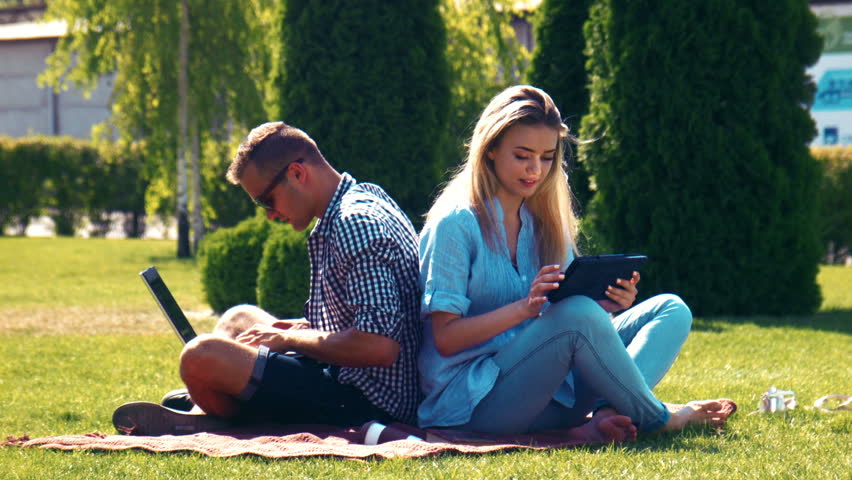
Why? Why did this use of technology engage the students so much? This part of my lesson, unlike the group lesson I taught at 10am was exactly within each student's Zone of Proximal Development. The advanced students easily found the work the was just challenging enough, and the struggling students found the same thing -- both within different places, but while sitting back to back on pillows in a classroom.

In addition, I found that providing students with opportunities to use certain applications on their mobile devices gave them opportunities to, for example, readily photograph items for a digital scavenger hunt, and to explore corners of the world they would not otherwise have a chance to experience. All of these tools were readily used by all of the students, regardless of their general ability levels.

Based on my own experiences with technology in the classroom, as well as my learning on this topic, I suggest that educators should be prepared to include mobile devices in their classrooms in order to offer every student "the zone."

The guiding principles I suggest to teachers considering the use of technology in their classroom are simple. First, can the mobile tool I am offering to my students bring them into the "zone" better and faster than I can alone? Second, will the learning they acquire from the use of these devices be applicable to every student in the room. This would negate a tool that provides static resources -- it is the customization within a given app that can deliver the app to each student, regardless of their position on the bell curve.

References
Khan, Sal. "Let's Use Technology to Reinvent Education TED Talk." March 2011. Published by TED. Retrieved June 23, 2017 from https://www.ted.com/talks/salman_khan_let_s_use_video_to_reinvent_education.

McLeod, Saul, "Zone of Proximal Development," 2012. Published by Simply Psychology. Retrieved June 23, 2017 from https://www.simplypsychology.org/Zone-of-Proximal-Development.html.

Photo credit: https://ak9.picdn.net/shutterstock/videos/18763946/thumb/1.jpg

TEACH-NOW M4U1A3: Ensuring a positive classroom climate in a diverse classroom, for Teach-Now M4U1A3

One fascinating, sticky challenge for beginning teachers is how to keep a positive, controlled classroom, particularly one that is populated by diverse learners. My experiences teaching so far have been in classrooms where most of the students are white, middle-class, straight, Protestant students -- simply put, they share these traits with me.
What will it be like when I'm teaching students who are Muslim, African American, gay, English Learners, and/or any of the many people who make up our country's classrooms? What is my plan in order to maintain a welcoming learning environment in which students feel heard, included, and educated to the best of their abilities?

There are several tactics I propose to use in my classrooms. Specifically I will open and continue honest discussions, I will tackle thorny issues head-on, and I will incorporate older students and students' family members as part of our community.

Open discussion
From the start of the school year, I want to make it clear to my students that we can and should discuss differences as they come up, and also that we will proactively discuss our cultural differences during our morning meetings, book discussions, and basically any time it comes up. Pretending that we aren't a diverse group -- or that I am culturally the "same" as all of my students -- is a lost cause. Many of my experiences are different from theirs.

Me (center) marching with my classmates through the mall.
x
For example, I attended a 95% white school where there were no English learners, and the students who were gay were unhappily closeted. As a result, I could assume that my classmates -- with the exception of one half-Jewish student who also had Hanukkah-- all celebrated Christmas in almost the same way my family did.

There were so many things that we simply didn't discuss because we assumed that we all wanted to marry someone of the opposite sex, that we all had similar home lives, and the greatest divisions among most of us were that some of us were Catholic, and others were Protestant.

Therefore, being in a classroom with diverse cultures, religions, races and sexual orientations is a new experience for me. I look forward to learning from this experience, as well as connecting with teaching mentors who have "been there done that" in diverse classrooms.

I should also specify that when I write "discussion" I'm referring both to group conversations, as well as inviting individual students to connect with me about this topic. According to GLSEN, for example, making it obvious to students that you are open to talking about tough topics such as sexual orientation makes them more likely to connect with you, and to keep the communication lines open. To that end, GLSEN recommends "Safe Space" stickers that teachers can use.

An eighth grade student quoted in Hill and Kearl's "Crossing the Line: Sexual Harassment At School" said, "I can't tell my teachers (that other students are calling me gay), they don't care." (p. 24) This is precisely the misconception I would like to rectify. I would make sure that any student who feels bullied in this manner knows that my door is open to them, regardless of their sexual orientation.


Tackling issues head-on
Instead of simply waiting for students to come to me with their concerns, I would like to make sure to bring up our differences proactively. Basically, to discuss my own demographic, and open up guided discussions, particularly as they relate to our academic topics, about other cultures, races, religions, and any differences that define us.

For example, when we are reading "Roll of Thunder, Hear My Cry," I would plan to talk straight on about the fact I am white, and how my impression of the book may be different from those of African-American readers. While I would be careful not to single out students -- I heard from a friend that she was once asked by a teacher, "You're black, so what do you think about slavery?" -- I would invite any and all opinions, and talk directly about racism in 1930's Mississippi, and how it correlates to racism in Mississippi today, for example.

I also want to be sure to use gender neutral terms and inclusive language throughout our discussions. I experienced this necessity when I taught in California and several of my students were being raised by same-sex parents. I learned quickly that saying "parents" came across more respectfully than saying, for example "mothers and fathers."

In addition, the attitude of "Zero Indifference" is also suggested by Amy Sharf. What this means is that disrespectful conduct is always addressed. Naming and responding to bullying or intolerant behaviors -- hallway and cafeteria banter in particular -- is an important part of setting the stage for a respectful classroom environment.

Incorporating "experts"
Finally, I believe that the best speakers regarding diversity issues are the people who know it best. Therefore, it's an excellent time for a teacher to step aside and invite others into the classroom.

For example, if I have Muslim students in the room who may be fasting for Ramadan, I would invite a Muslim staff member at the school, older Muslim students, or, if they're willing, the families of the Muslim students to come in and discuss their faith and why they are fasting (and celebrating) during Ramadan. It has been my experience in the past that students tend to listen most respectfully to new people, speaking from expertise, in the classroom. This approach is far superior to my standing in front of the class and telling them what I think Ramadan is about, and may open up excellent ongoing discussion.

These "experts" I invite into the room don't have to be physically present, or even alive, to be in our classroom. I could also be sure to incorporate quotes and life stories of diverse heroes. In addition to my inspirational poster of Babe Ruth, Maya Angelou and Andy Warhol quotes would have a place on our walls. Students would also be welcomed to include photos and quotes from their heroes in our decor. As Amy Sharf recommends in her "Critical Practices for Anti-Bias Education," "Classrooms should be decorated with multicultural images that mirror student backgrounds and showcase the diversity of our society." (p.9)

These are the steps I plan to take in order to welcome diverse students into my classroom. I recognize it will be a challenge unlike any I've faced in my educational career so far, but I think with enough mentor support and a well-stocked toolbox filled with responsive and proactive tactics, it's a challenge I am ready to face.


References
Williams, Jennifer, "Ramadan 2017: 9 Questions about the Muslim holy month you were afraid to ask." June 32, 2017. Published by Vox. Retrieved June 29, 2017 from https://www.vox.com/2017/5/25/11851766/what-is-ramadan-2017-muslim-islam-about

Hill, Catherine and Holly Kearl, "Crossing the Line: Sexual Harassment At School." 2011. Published by AAUW. Retrieved June 29, 2017 from http://www.aauw.org/files/2013/02/Crossing-the-Line-Sexual-Harassment-at-School.pdf

Sharf, Amy, "Critical Practices for Anti-Bias Education." Undated. Published by the Southern Poverty Family Law Center. Retrieved June 29, 2017 from http://www.tolerance.org/sites/default/files/general/PDA%20Critical%20Practices_0.pdf

TEACH-NOW M4U3A2: Creating High Performance Learning Environments

Looking for High Expectations in the Classroom: An analysis of three lessons


Example 1:

5th Grade Physics
Donna Migdol, Oceanside School District, NY

Academic Expectations
During Ms. Migdol's physics experiment with her fifth graders she holds each student highly responsible for actions within the roller coaster assembly. She even holds the students responsible for their use of materials, charging them "money" for materials they use to construct their coasters, and highly restricts the amount of materials in general that the students can use.

Ms. Migdol asks the students to collaborate with each other, a challenge they rise to. They are repeatedly using the new vocabulary and communicating the concepts of the lesson, reinforcing all of their learning.

Ms. Migdol also works very closely with her students to determine their misconceptions and "welcome problems." This is another variable in the "high expectations" equation.

Behavior Expectations
The teams are working quietly together, concentrated on their tasks, and they listen well to Ms. Migdol's ongoing instruction. This is likely the result of two things: (1) Ms. Migdol likely communicated clear behavior expectations at the beginning of the school year, as well as the beginning of the lesson, (2) The lesson is beautifully designed and the students are engaged. They would be letting down their group, as well as their teacher, if they chose to goof off or argue with their classmates, and also, they seem to be enjoying the project.

Norms and Procedures
The teams are working respectfully together. No one is argumentative at any point in this video. They students seem very engaged in their assigned jobs. Part of this is the responsibility the students take on when they choose these jobs. The students are in touch with their strengths, and they are each bringing these to the team effort.

Criticism
The students in this exercise are limited to one activity within their group, one that they select themselves. This may limit the students' ability to learn. If that student who is talented in math elects to be the accountant, he/she may miss out on a chance to have been the leader. Ideally, these roles should swap either mid-project, or from project to project in this classroom.

Example 2:

Third-grade Chinese math
Crystal Chen

Academic Expectations
Ms. Chen held the students to a high standard: these are not native Chinese speakers, and they are asked to rattle off the Chinese multiplication tables in unison. Most of the students seem to be rising to the challenge as well. The three-digit subtraction problem that Ms. Chen puts on the board is fairly difficult for the average third grade student, but they seem to enthusiastically rise to this challenge as well, understanding which way to calculate the subtraction question.

Behavior Expectations
Ms. Chen's expectation seemed to be that the class follow along with the chant and then work together to solve the subtraction question. She did not seem to encourage 100% participation, but was content with about 80% participation throughout the exercise. Like Ms. Migdol's students, they were adequately engaged, and there was not a lot of room for goofing off or going off-topic. In this case they were so engaged because the teacher was leading the lesson almost 100%.

Norms and Procedures
The students seem to be in the habit of sitting on the carpet facing the teacher and reciting the chant of math facts together with her. They seemed to be pretty locked on her. I did notice that the young man in the third row, although he was facing the teacher and not misbehaving, was not participating. I wonder if that is OK for Ms. Chen, for example, if he is a new student in the class or has an IEP that specifies he is not required to participate.

Criticism
I would personally find this style of teaching exhausting if I were doing it for eight hours each day, since the students are not contributing much other than their assistance in calculating the subtraction question. This seems like the teacher is "on" 100% in terms of performing the lesson for the students. There is no "turn and talk"-type collaboration in solving the question, there is no individual white board calculation, there is simply a group solution after the chanting is done. I recognize that Chinese math teaching has many advantages, but I am not sure it is my style. I like to incorporate the personalities of my students in my lessons as much as possible and Ms. Chen has a different, lesson-focused approach. It feels like a conformist approach that I tend to shy away from.


Example 3:

Whole Brain Teaching
Roxi Shayne and Chris Biffle

Academic Expectations
In the lessons I observed by Roxi Shayne, the academic expectations were remedial. She explains in the comments of her two high school videos that these are remedial students who need this kind of review. I imagine that students who are very familiar with this material would be frustrated with the repetition of simple concepts they have already mastered. So in the Whole Brain Teaching videos I have seen, there aren't very high expectations in terms of what students have learned already. There are, however, high expectations regarding learning the materials, however remedial they may be.

Behavior Expectations
The rules that Chris Biffle lays out in his "How To Begin Whole Brain Teaching 1" video are very simple, and the students learn them quickly, and the process is fun. There is also no room for debate, which I liked. No student interrupts to say, "But what if....?" The rules seem to be taken at face value. Roxi Shayne also explained in the comments in her video that she simple explained these rules and the students never questioned them.

These are the specific rules that Mr. Biffle teaches the middle school students:

Rule 1: Follow Directions Quickly
Rule 2: Raise Your Hand for Permission to Speak
Rule 3: Raise Your Hand for Permission to Leave Your Seat
Rule 4: Make Smart Choices
Rule 5: Keep Your Dear Teacher Happy

I like that there aren't too many rules, and several of these can cover multiple topics. For example, "Keep Your Dear Teacher Happy" can encompass many aspects of in-class behavior, but it's pretty clear what it would mean.

Criticism
This technique seems to work very well with the middle school students taught by Mr. Biffle and the remedial high school students Ms. Shayne is teaching. The problem I see with this method is that it doesn't allow for the outliers in the classroom. For example, any student with an IEP for mild to moderate autism is going to be bothered by this level of clapping noise and expected interaction with classmates. In addition, a gifted student is going to become bored, and possibly upset, but the slow review of topics prior to a test. 

It seems to me that the success of this method can depend upon how mainstream the students are. The outliers in the classroom may have a problem with it.


Setting high performance expectations among my own students

These three videos, and the similar videos and articles I have read regarding high expectations have been compelling. My own teaching future is up in the air: I have learned to live with the uncertainty as to whether I will be teaching fourth grade or 12th grade in the upcoming school year! Regardless, it's an excellent opportunity to use these videos to hone my own craft, and examine the expectations I have for my students.

It is difficult to admit how much I saw myself in some of the examples of teachers who left some students out of the conversation, just as Ms. Chen does with her performance-style classroom management. When I'm wrapped up in teaching a lesson, I will sometime not dwell on a student who isn't quite getting it, or doesn't feel like participating. This is a technique I read about in Rafe Esquith's "Real Talk for Real Teachers" -- basically instead of adopting a "No Child Left Behind" policy in one's classroom, you can just leave some of the students behind sometimes -- otherwise you cheat the rest of the students out of a quality lesson.

The Whole Brain Teaching methods used by Chris Biffle and Roxi Shayne are inspiring. I like the idea of using some of these components in my classroom, although spending the entire class time chanting sounds somewhat, well, socialist to me. It also doesn't allow for a lot of individuality. 

I believe there is a middle ground -- I can expect more from my students while not dwelling on students who are reluctant to share. For example, telling a student I will be returning to him/her in five minutes and that I expect an answer communicates to that student that I have faith in them, that I know they can answer this question given additional time.

To that end, I believe Donna Migdol's teaching methods using project-based learning and teams of students resonate most firmly. I would like to be this organized, this responsive to my students (for example, offering materials I hadn't initially expected to need for the class), and holding them all to a high standard academically and behaviorally. It is my hope to emulate Migdol's teaching methods in my future classroom. In addition, I would be very grateful to have an in-school mentor who holds the same beliefs I do about teaching individual students and accounting for their differences.


References

Esquith, Rafe. "Real Talk for Real Teachers," published by Penguin Books, 2013.

"3rd Grade Chinese Math," published by Crystal Chen, June 13, 2011. Retrieved July 12, 2017 from https://www.youtube.com/watch?v=h7LseF6Db5g

"How to Begin Whole Brain Teaching: 1," published by Whole Brain Teaching. February 12, 2010. Retrieved July 12, 2017 from https://www.youtube.com/watch?v=JJw9mzCtWbk

"Roller Coaster Physics: STEM in Action" published by Teaching Channel. Retrieved  July 12, 2017 from https://www.teachingchannel.org/videos/teaching-stem-strategies

"Whole Brain Teaching Richwood High." published by Roxi Shayne, May 31, 2011. Retrieved July 12, 2017.


TEACH-NOW M4U5A1: Reinforcement and Consequences in the Classroom

Mrs. Kain's Reinforcement Problems

The notion of a "marble jar," a star chart, or the ringing of a bell to bring the class to attention makes me antsy. This is not to say that I've got classroom management down cold -- I don't. It is something I'm continuing to learn, and the first step in continuing that education is, for myself, admitting how much I don't like managing behaviors compared to educating students.

I reject the economies
So many teachers use a complicated (to me) economics system involving class "bucks" that the students earn for good behavior. Students earn these "bucks" by turning in homework in time, listening attentively, contributing to class, and being quiet in the halls. They lose these bucks when they have to go to the bathroom (I once subbed in a class where I had to charge the students $2 to leave the classroom to go to the bathroom), or if they have to go out to the hallway to get something once class has begun.

I'd like to say that I won't institute such an economy because of philosophical differences with the technique but I'll admit that it's simply logistical for me. My brain simply doesn't work that way. I held a long-term substitute position that involved class "bucks" and the whole economy went haywire under my direction. I messed up the entire economy when I arbitrarily gave one student a $100 bill I found. 

The same goes for systems such as Class Dojo, and "Dream Cards" and tickets that students earn for good behavior. These might work beautifully for other teachers, but I just can't concentrate on them long enough to be responsible with them. All of these economies -- in which good behavior earns credit -- require too much ongoing maintenance, and I would rather I spend my prep time cooking up fabulous, memorable lesson plans for my students. I mean, when my students look back on their school career, I'd rather they remember the lesson I did on praying mantises that ended up with me screaming and running away, rather than a card they earned for paying attention.

I use strange, daily, opportunistic praise
My favorite way to praise students for good behavior is a constant peppering of commentary, letting parents know when things are going well, displaying hard work on the classroom walls, and -- on a constant basis -- watching what behaviors they're exhibiting and calling it out constantly. 

For example:

"I love how Missy is waiting patiently for me to start reading," I'll say, and Missy beams and the rest of the class looks at her and emulates her. This technique I have seen work again and again. It's not perfect -- the students shouldn't be rowdy on the reading rug in the first place, but instead of standing there hollering at them with a vein in my temple throbbing, just quietly praising the student who is behaving seems very powerful.

There are also catch-as-catch-can rewards that simply materialize throughout the day in a classroom. For example, if the students are eager to hear the end of a story we began earlier in the day, I can tell them, "If we can get these assignments finished and the classroom cleaned up in the next 20 minutes, we will have 15 minutes before the bell rings to find out what happened to Count Olaf!" Generally this results in agreeable scrambling to get everything done on time.

But weird reward systems crop up all of the time, if I'm paying attention. For example, once I taught an adorable third grade class for a week, and there was one boy, older and wilder than the rest of the students, who loved a big fluffy pillow in the reading nook.


This child didn't just "like" that pillow, he thought about that pillow all of the time. It was very soft and squishy and it was, by far, the largest pillow in the reading nook. He schemed all day for opportunities to touch, squeeze, and sit on the pillow. However, he had a hard time getting his work done throughout the day, and could be quite disruptive to the entire class, and he sometimes became too physical with his peers.

So one day he came into the class and discovered I had put the pillow up on a cabinet, out of his reach. I called him over and told him that I had devised a way for him to spend more than an hour with that pillow later, but he was going to have to work with me on it. He was excited about this reward, and he dutifully performed all of the work he needed to do that morning, even helping other students get their work done, with his mind on that big fluffy pillow.

Listen, I don't know what it was about that student and his pillow, and I'm lucky he didn't become angry with me for putting it out of his reach, but he responded beautifully to the reward of pillow access. The rest of the students were generally OK with him having this reward system, because he was much less disruptive when he was earning "pillow time." It completely worked for him -- the way a marble jar or class bucks would not have worked.


Mrs. Kain's Consequences
How I respond when a student is breaking a rule is also quite situational.

The rules are basic and posted on the classroom wall. We respect each other, we respect our teacher, and we respect our school. And I'd like to think that I display the "withitness" that is revered in pedagogical literature. It's obvious when I'm NOT "with it," that's for certain. On days when I am off my game and not in tune with my students, things tend to tumble out of control. Knowing that there is trouble brewing before it begins to happen is essential to caring for a classroom of individuals.

Moving toward students who are starting to lose focus, and changing the lesson when appropriate so it stays engaging for all of the students works to head off a lot of problems, but sometimes they occur anyway. That's when it's time for consequences.

Like the unique forms of reinforcement I use in my classroom, consequences can often be related to a specific behavior. I am a fan of what Robert Marzano calls "overcorrection" in his book, "The Art and Science of Teaching" (2007). This means that when a student damages school property, for example, he or she becomes responsible for repairing the damage they did, but also additional damage done by previous perpetrators.

It can also be effective -- but only if it's brief and doesn't interrupt the flow of the lesson -- to stop the lesson and, in Marzano's words, "confront the behavior." This means just stopping the cadence of the reading or the lesson, and calling out the behavior. It's likely that most of the class has lost track of the lesson anyway, quite possibly distracted by the perpetrators. One thing that has worked well for me is to say something like, "Adam, I believe you owe Jenny an apology. She listened carefully when you were reading the story out loud, and now you are talking while she's reading it out loud."

Again, I don't say this because it's a teaching philosophy, but it's a real-life consequence of bad behavior. Your classmates are annoyed with your behavior, and I'm letting you know about it. Sure, I'm annoyed too, but next year you'll have a different teacher -- these peers are with you for the long haul, and they don't like the way you treat them.

Keeping it chill
The most important part of providing quick and appropriate responses to the misbehavior is for me to not lose my cool. This is crucial to the success of the classroom, as well as the student who needs the redirection -- I cannot respond in anger, even if I'm genuinely pissed off.

If I'm blinded by my own anger (which is, ultimately, a selfish reaction to the situation), the path to redirection becomes muddied. I'm likely to send a student out of the classroom, which is a path of last resort, just because I don't want to handle him or her anymore. Instead, the best course may be to see how the student can redirect his or her energy, and to provide a lightning fast and non-distracting consequence.

The wrong way (or, what might be happening in my mind): "Why won't you simply copy down this Frost poem!? The whole class is done with it and we can't move on until you FINISH THE DAMN POEM!?"

The better way: "I can see you're not yourself today. Usually you love copying these poems. You can either finish it in the next two minutes, or we can work on it during recess. What would work for you? And would you like to draw some pictures in the margins to make it more 'yours?'"

In conclusion, managing elaborate classroom economies with rewards and punishments meted out in tickets, chips, marbles, or "bucks" is not my teaching style -- but I can't simply do away with these time honored methods without having a replacement in mind.

My suggested replacement involves using excessive "withitness" into the classroom and providing real-time incentives and punishments as situations evolve. What I lack in ability to track an "economy" I more than make up for in intuition and the ability to think on my feet.

What if it's over my head?
I've created this flowchart to indicate how reinforcements and consequences will function when they involve authority figures outside of my classroom. The flowchart focuses very specifically on the repetitive and more extreme behaviors that can't be handled by my "withitness" or any classroom economy, and fall under the authority of other adults in the school.


References

Marzano, Robert. The Art and Science of Teaching. Association for Supervision and Curriculum Development. 2007

Photo Credits

Spilled marble jar. Thehkscitizen.com. Retrieved July 30, 2017 from http://www.thehkscitizen.com/wp-content/uploads/2017/04/A-Jar-That-Is-Not-Full-Picture.jpg

Big green pillow. Wayfair.com. Retrieved July 30, 2017 from https://secure.img1-fg.wfcdn.com/im/7d01a3a4/resize-h490-p1-w490%5Ecompr-r85/3120/31203033/Pure+Mongolian+Throw+Pillow.jpg


TEACH-NOW M5U1A2: Standards and Backwards Mapping for a Language Arts Technology Writing Unit

How do I create a curriculum that fully meets a Pennsylvania standard? 
In the words of Jay McTighe, the trick is to engage in what he calls "backward design." Although the concept is not new in education, having first been suggested by Ralph W. Tyler in 1949, McTighe is credited with applying this "backwards" approach to writing curriculum. He advises that teachers think of the Latin origins of the word curriculum, which means "a course to be run."
In order to determine the direction I am running, I need to start with a fully realized goal. In this case it's Pennsylvania standard CC.1.4.6.U, which reads: 
Use technology, including the Internet, to produce and publish writing as well as to interact and collaborate with others; demonstrate sufficient command of keyboarding skills to type a minimum of three pages in a single sitting. (Pennsylvania Department of Education, 2014)

Why this standard?
I found an exciting standard for sixth grade writing that requires the use of technology. My credential will be in Grades 4-8 Language Arts, and my own children are going into 3, 4, and 7th grade, so this standard piques my interest. Furthermore, before I switched careers, I worked in the "edutainment" industry, so my background helps me along this "course to be run" as well.
In addition, I believe that this skill is highly valuable to students regardless of their academic and career paths. Learning to intelligently create, collaborate, and share one's writing using technology is an important skill for any student to master before they are ready for seventh grade.

Three proficiencies students will be able to do when they finish this unit
  1. Information-finding. They will know how to search for reputable news and objective information on a subject (versus biased or commercially motivated writing), and to properly cite that information in their own writing. 
    1. Students who are just developing this skill can focus on identifying whether the site is ".com" vs. ".gov" and explain why this makes a difference as to whether the information is reliable. 
    2. Students who are relatively proficient can cite multiple reputable sources, and find materials elsewhere that back up the information they found on a reliable source.
    3. Students who are extending their learning in this arena can compare and contrast information found in multiple sources, and demonstrate to classmates which they found to be most reliable and why. 
  2. Publishing quality work. Students can publish their own writing in a public space online in a polished, appropriate, well-annotated manner, and share that writing with classmates and other interested readers.
    1. Students approaching this skill for the first time can work to publish writing on a class blog reviewed by their peers. Before the work is published, they will print it out and work to repair any grammatical or factual errors.
    2. For students who have some experience publishing online, they can create a private blog of their writing and post three short observations related to their experiences at school.
    3. For students with significant publishing experience they will be challenged to design and create a class blog, to create some initial content for it, and to open it up for subject-specific submissions by their classmates.
  3. Work together. Students will collaborate on a document with classmates, and to produce and share a polished result of that collaboration. 
    1. Students who are new to collaboration will be paired in their own group. They will receive a relatively simple assignment to start: a rhyming poem for which each member of the group is responsible for one line. For example, Students A, B, C, and D would write a sixteen line rhyming poem in which they take turns adding lines in a Google Document. (ABCD ABCD ABCD ABCD)
    2. Students who have done online collaboration with classmates before will be asked to create an informational text together regarding something that the group agrees is of high interest. This should be an opinion piece supported by factual evidence, and the group will be assigned by the teacher to tackle specific parts of the essay topic they choose.
    3. Students who are very comfortable collaborating with each other will receive a much more amorphous task. They will be asked to make a Google Slides presentation of a topic of their choosing, but they most choose that topic and the design of the slides from different locations in the school so the situation mimics long-distance collaboration.


Three assessments to know whether students are meeting the standard

  1. Find the reputable source. Students are given a series of annotated "facts" and must determine which are derived from objective sources, and which are not. They will need to look for a ".gov" or ".edu" in the website address, as well as the content itself, and how it is used to support the author's claims.
  2. Collaborate to write. They will be paired with a new group of 3-4 students and given one class period to silently collaborate on and complete a series of small written projects (a limerick about the school cafeteria, an advertisement for tutoring services, and an informational text about The Humane Society of the United States)
  3. Type fast! Students will be challenged to produce one, then two, then three pages of writing in a single sitting, to test their keyboarding skills. They will be given a choice of multiple high-interest subjects so that research or uncertainty is less likely to slow them down. This will amount to three typing assessments in a single week.


Three learning experiences that will help students meet the standard
  1. Exploring writing apps. Students will participate in a jigsaw learning activity where they master a writing-related app and then teach their classmates how to use the app. These apps can include Clean Writer, a distraction-free writing app for mobile phones; Writing Challenge and Writing Prompts, prompt generators for phones; Pages, a mobile word processor; and Write, a note-taking app.
  2. Online scavenger hunt. Students compete in an online scavenger hunt, using reputable sources to answer questions about literary figures covered in other parts of their Language Arts lessons. This competitive experience will teach students how to efficiently find information to guide their writing, as research techniques will be reviewed prior to the hunt, and winning players will share their strategies afterwards.
  3. Fictional character blogs. Students post daily, public blogs written in the voices of fictional characters on adventures such as Jim from Mark Twain's Huckleberry Finn or Salamanca from Sharon Creech's Walk Two Moons. Students may further collaborate with other students around the country or the world to read and comment on each others' fictional character blogs.


In summary, this Pennsylvania English Language Arts standard lends itself to many different types of learning situations -- from the simple coordination required to quickly manipulate a keyboard to the complicated task of collaborating with far-flung peers.
I find it to be an inspiring standard from which to create "a course to be run!"


References
Pennsylvania Department of Education. (2014) Academic Standards for English Language Arts. Harrisburg, PA.

McTighe, Jay. (2012, December 6) "Common Core Big Idea 4: Map Backward From Intended Results." Retrieved from https://www.edutopia.org/blog/common-core-map-backwards-jay-mctighe-grant-wiggins.

Selby, Joan. (2016, June 10) "16 Writing Apps for Students and Teachers." Retrieved from https://www.aaeteachers.org/index.php/blog/1642-16-writing-apps-for-students-and-teachers