The notion of a "marble jar," a star chart, or the ringing of a bell to bring the class to attention makes me antsy. This is not to say that I've got classroom management down cold -- I don't. It is something I'm continuing to learn, and the first step in continuing that education is, for myself, admitting how much I don't like managing behaviors compared to educating students.
I reject the economies
So many teachers use a complicated (to me) economics system involving class "bucks" that the students earn for good behavior. Students earn these "bucks" by turning in homework in time, listening attentively, contributing to class, and being quiet in the halls. They lose these bucks when they have to go to the bathroom (I once subbed in a class where I had to charge the students $2 to leave the classroom to go to the bathroom), or if they have to go out to the hallway to get something once class has begun.
I'd like to say that I won't institute such an economy because of philosophical differences with the technique but I'll admit that it's simply logistical for me. My brain simply doesn't work that way. I held a long-term substitute position that involved class "bucks" and the whole economy went haywire under my direction. I messed up the entire economy when I arbitrarily gave one student a $100 bill I found.
The same goes for systems such as Class Dojo, and "Dream Cards" and tickets that students earn for good behavior. These might work beautifully for other teachers, but I just can't concentrate on them long enough to be responsible with them. All of these economies -- in which good behavior earns credit -- require too much ongoing maintenance, and I would rather I spend my prep time cooking up fabulous, memorable lesson plans for my students. I mean, when my students look back on their school career, I'd rather they remember the lesson I did on praying mantises that ended up with me screaming and running away, rather than a card they earned for paying attention.
I use strange, daily, opportunistic praise
My favorite way to praise students for good behavior is a constant peppering of commentary, letting parents know when things are going well, displaying hard work on the classroom walls, and -- on a constant basis -- watching what behaviors they're exhibiting and calling it out constantly.
For example:
"I love how Missy is waiting patiently for me to start reading," I'll say, and Missy beams and the rest of the class looks at her and emulates her. This technique I have seen work again and again. It's not perfect -- the students shouldn't be rowdy on the reading rug in the first place, but instead of standing there hollering at them with a vein in my temple throbbing, just quietly praising the student who is behaving seems very powerful.
There are also catch-as-catch-can rewards that simply materialize throughout the day in a classroom. For example, if the students are eager to hear the end of a story we began earlier in the day, I can tell them, "If we can get these assignments finished and the classroom cleaned up in the next 20 minutes, we will have 15 minutes before the bell rings to find out what happened to Count Olaf!" Generally this results in agreeable scrambling to get everything done on time.
But weird reward systems crop up all of the time, if I'm paying attention. For example, once I taught an adorable third grade class for a week, and there was one boy, older and wilder than the rest of the students, who loved a big fluffy pillow in the reading nook.
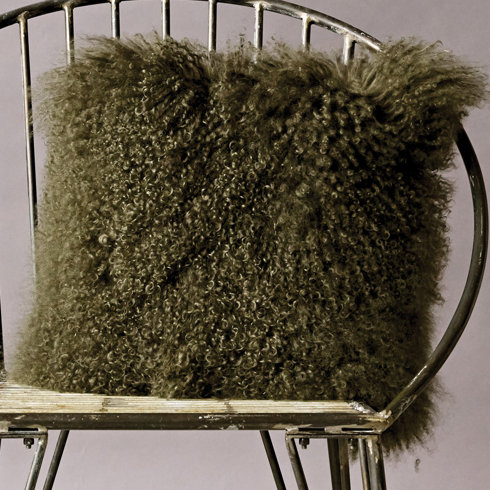
So one day he came into the class and discovered I had put the pillow up on a cabinet, out of his reach. I called him over and told him that I had devised a way for him to spend more than an hour with that pillow later, but he was going to have to work with me on it. He was excited about this reward, and he dutifully performed all of the work he needed to do that morning, even helping other students get their work done, with his mind on that big fluffy pillow.
Listen, I don't know what it was about that student and his pillow, and I'm lucky he didn't become angry with me for putting it out of his reach, but he responded beautifully to the reward of pillow access. The rest of the students were generally OK with him having this reward system, because he was much less disruptive when he was earning "pillow time." It completely worked for him -- the way a marble jar or class bucks would not have worked.
Mrs. Kain's Consequences
How I respond when a student is breaking a rule is also quite situational.
The rules are basic and posted on the classroom wall. We respect each other, we respect our teacher, and we respect our school. And I'd like to think that I display the "withitness" that is revered in pedagogical literature. It's obvious when I'm NOT "with it," that's for certain. On days when I am off my game and not in tune with my students, things tend to tumble out of control. Knowing that there is trouble brewing before it begins to happen is essential to caring for a classroom of individuals.
Moving toward students who are starting to lose focus, and changing the lesson when appropriate so it stays engaging for all of the students works to head off a lot of problems, but sometimes they occur anyway. That's when it's time for consequences.
Like the unique forms of reinforcement I use in my classroom, consequences can often be related to a specific behavior. I am a fan of what Robert Marzano calls "overcorrection" in his book, "The Art and Science of Teaching" (2007). This means that when a student damages school property, for example, he or she becomes responsible for repairing the damage they did, but also additional damage done by previous perpetrators.
It can also be effective -- but only if it's brief and doesn't interrupt the flow of the lesson -- to stop the lesson and, in Marzano's words, "confront the behavior." This means just stopping the cadence of the reading or the lesson, and calling out the behavior. It's likely that most of the class has lost track of the lesson anyway, quite possibly distracted by the perpetrators. One thing that has worked well for me is to say something like, "Adam, I believe you owe Jenny an apology. She listened carefully when you were reading the story out loud, and now you are talking while she's reading it out loud."
Again, I don't say this because it's a teaching philosophy, but it's a real-life consequence of bad behavior. Your classmates are annoyed with your behavior, and I'm letting you know about it. Sure, I'm annoyed too, but next year you'll have a different teacher -- these peers are with you for the long haul, and they don't like the way you treat them.
Keeping it chill
The most important part of providing quick and appropriate responses to the misbehavior is for me to not lose my cool. This is crucial to the success of the classroom, as well as the student who needs the redirection -- I cannot respond in anger, even if I'm genuinely pissed off.
If I'm blinded by my own anger (which is, ultimately, a selfish reaction to the situation), the path to redirection becomes muddied. I'm likely to send a student out of the classroom, which is a path of last resort, just because I don't want to handle him or her anymore. Instead, the best course may be to see how the student can redirect his or her energy, and to provide a lightning fast and non-distracting consequence.
The wrong way (or, what might be happening in my mind): "Why won't you simply copy down this Frost poem!? The whole class is done with it and we can't move on until you FINISH THE DAMN POEM!?"
The better way: "I can see you're not yourself today. Usually you love copying these poems. You can either finish it in the next two minutes, or we can work on it during recess. What would work for you? And would you like to draw some pictures in the margins to make it more 'yours?'"
In conclusion, managing elaborate classroom economies with rewards and punishments meted out in tickets, chips, marbles, or "bucks" is not my teaching style -- but I can't simply do away with these time honored methods without having a replacement in mind.
My suggested replacement involves using excessive "withitness" into the classroom and providing real-time incentives and punishments as situations evolve. What I lack in ability to track an "economy" I more than make up for in intuition and the ability to think on my feet.
What if it's over my head?
I've created this flowchart to indicate how reinforcements and consequences will function when they involve authority figures outside of my classroom. The flowchart focuses very specifically on the repetitive and more extreme behaviors that can't be handled by my "withitness" or any classroom economy, and fall under the authority of other adults in the school.
References
Marzano, Robert. The Art and Science of Teaching. Association for Supervision and Curriculum Development. 2007
Photo Credits
Spilled marble jar. Thehkscitizen.com. Retrieved July 30, 2017 from http://www.thehkscitizen.com/wp-content/uploads/2017/04/A-Jar-That-Is-Not-Full-Picture.jpg
Big green pillow. Wayfair.com. Retrieved July 30, 2017 from https://secure.img1-fg.wfcdn.com/im/7d01a3a4/resize-h490-p1-w490%5Ecompr-r85/3120/31203033/Pure+Mongolian+Throw+Pillow.jpg

No comments:
Post a Comment